
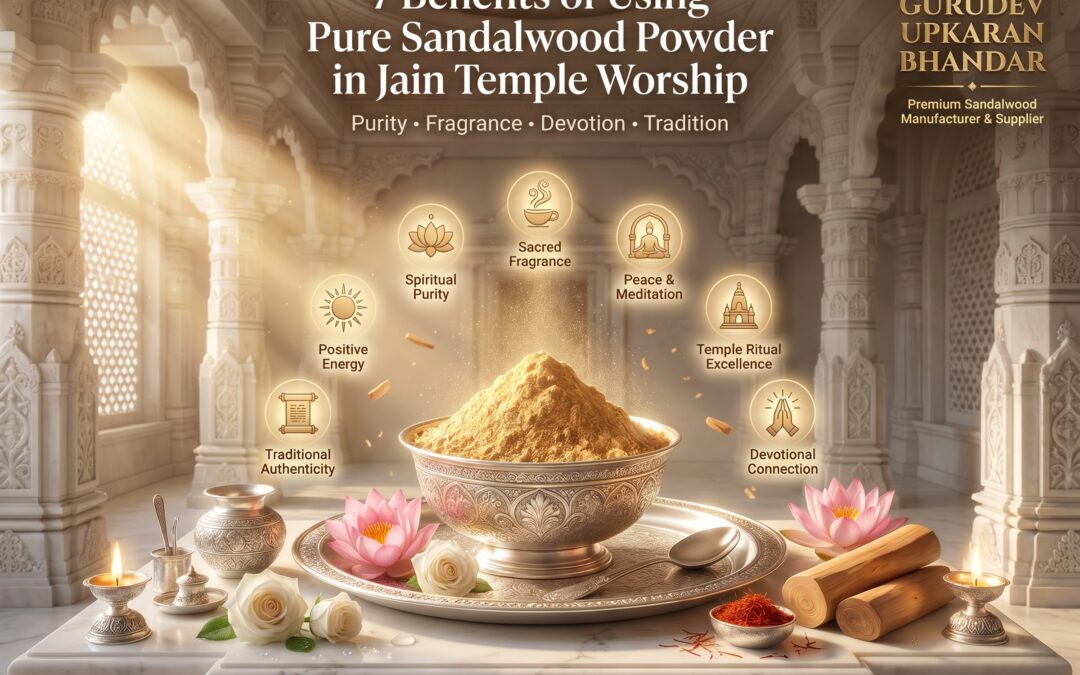
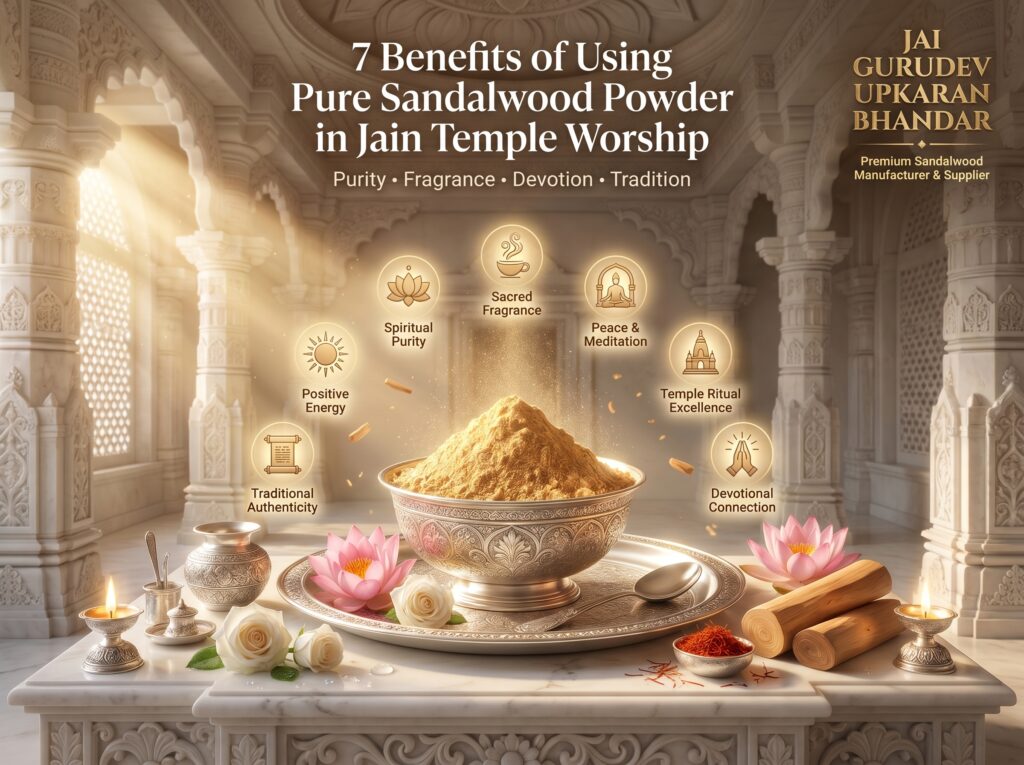
Pure Sandalwood Powder, also called chandan powder, holds a sacred place in Jain temple worship. Devotees mix it with water to make a smooth paste. They then apply it to the idol during chandan puja. The powder stands for right knowledge, cools and calms the mind, fills the space with a clean natural scent, and helps focus devotion.
https://www.instagram.com/jai_gurudev_upkaran_bhandar?igsh=MWJ1NWoybnY5c3N1Yw==
https://www.facebook.com/share/1XYnyFYKR8/?mibextid=wwXIfr
www.linkedin.com/in/jai-gurudev-upkaran-bhandar-0b76b93b5
To Buy – 637416695 / 9884701110
Contents
- 1 What Is Pure Sandalwood Powder (Chandan Powder)?
- 2 Why Does Sandalwood Matter So Much in Jainism?
- 3 7 Benefits of Using Pure Sandalwood Powder in Jain Temple Worship
- 3.1 1. It Stands for Right Knowledge (Samyak Jnana)
- 3.2 2. It Cools and Calms the Mind
- 3.3 3. It Fills the Temple With a Natural Fragrance
- 3.4 4. It Helps Keep Idols and the Space Clean
- 3.5 5. It Is the Heart of the Nava-Anga Chandan Puja
- 3.6 6. It Fits Jain Values of Purity and Non-Violence
- 3.7 7. It Connects You to a Long, Living Tradition
- 4 How Do You Use Chandan Powder in Jain Puja? (Step by Step)
- 5 How to Tell Pure Sandalwood Powder From Fake
- 6 Where to Buy Pure Sandalwood Powder for Temple Use
- 7 Does the Practice Change Between Jain Sects?
- 8 How to Store Chandan Powder So It Lasts
- 9 Frequently Asked Questions
What Is Pure Sandalwood Powder (Chandan Powder)?
Pure Sandalwood Powder is made from the heartwood of the sandalwood tree. The most prized type comes from the Indian sandalwood tree, known by its botanical name Santalum album. Workers cut the inner wood and grind it into a soft, fine powder. People call this powder “chandan” in many Indian languages.
The powder has a few simple signs of quality. Real chandan powder feels cool to the touch. It has a soft, sweet, woody smell. The color is usually pale yellow or light beige. The scent is gentle, not sharp or chemical.
Sandalwood comes in a few forms. There is the raw log, the fine powder, the ready-made paste, and the essential oil. In Jain worship, the powder is the most common form. Worshippers like it because they can make a fresh paste each day. Fresh paste feels clean and respectful for the idol.
Chandan powder is not the same as ashtagandha or other mixed tilak powders. Ashtagandha blends eight fragrant items together. Pure chandan powder is just sandalwood. For temple worship, many Jain families prefer the pure form. They want a clean, single offering with no fillers.
Why Does Sandalwood Matter So Much in Jainism?
Jain worship of an idol follows a clear order. One of the most loved forms is the Ashta Prakari Puja. “Ashta” means eight. “Prakari” means types. So this is worship with eight offerings.
The eight offerings are water, sandalwood, flowers, incense, lamp, rice, sweets, and fruit. Each one carries a deep meaning. Each one teaches the worshipper a lesson about the soul.
Sandalwood, or chandan puja, is the second of these eight. In Jain teaching, chandan stands for knowledge, called jnana. By offering sandalwood, the devotee asks for right knowledge. Jainism teaches that right knowledge is a main path to liberation, or moksha.
There is a second, beautiful meaning too. The chandan puja verse speaks of coolness and calm. Sandalwood is cool by nature. The Tirthankara’s face is calm and at peace. So the worshipper applies the cool paste and wishes for that same calm inside the soul. The goal is a peaceful, steady mind.
This is why chandan is not a small detail in Jain worship. It is one of the eight core offerings. It carries both a lesson, knowledge, and a feeling, inner calm.
A note on tradition: The detailed chandan ritual described here follows the Svetambar Murtipujak custom of idol worship. Other Jain traditions, such as Digambar, may follow different steps. Always follow the customs of your own temple and guru.
7 Benefits of Using Pure Sandalwood Powder in Jain Temple Worship
Here are seven clear reasons devotees and temples value Pure Sandalwood Powder. Each one is rooted in both faith and daily practice.
1. It Stands for Right Knowledge (Samyak Jnana)
In Jainism, chandan is a symbol of knowledge. When you offer sandalwood, you are not just adding scent. You are making a quiet promise. You promise to seek truth and right knowledge.
This meaning matters every time you do the puja. The act becomes a reminder. It pulls your mind toward learning, honesty, and clear thinking. Over time, this gentle reminder shapes how you live. That is the real benefit. The powder turns a daily ritual into a daily teaching.
For many worshippers, this is the deepest gift of chandan. It links a simple object to a high goal. A pinch of powder becomes a call to grow wiser and kinder.
2. It Cools and Calms the Mind
Sandalwood has a cooling nature. People have used it for this for centuries. Ayurveda, the old Indian system of wellness, describes sandalwood as a cooling agent. Classic texts like the Charaka Samhita and Sushruta Samhita mention chandan for soothing heat and a restless mind.
In the temple, this cooling theme runs deep. The worshipper applies cool paste to the calm idol. The act invites calm into the heart. Many people say the soft scent helps them settle before prayer. A settled mind prays better.
Modern research backs the calming idea, at least for sandalwood oil and its scent. Some studies suggest the smell of sandalwood may ease mild anxiety and support rest. Keep in mind that most of this research uses sandalwood oil, not the thin paste used in worship. Still, the link between sandalwood and calm is old and strong.
3. It Fills the Temple With a Natural Fragrance
A Jain temple should feel clean, fresh, and pure. Pure Sandalwood Powder helps create that feeling. Its scent is soft and woody. It is not loud or harsh. It does not sting the nose like many synthetic sprays.
This gentle smell suits worship well. It marks the space as sacred without overwhelming anyone. The fragrance can linger for hours. Some say a touch of true sandalwood holds its scent for a long time.
For people who dislike strong chemical air fresheners, this is a real plus. Pure chandan offers a natural way to keep the prayer space pleasant. It supports a quiet, focused mood for everyone who enters.
4. It Helps Keep Idols and the Space Clean
Sandalwood is known for natural antibacterial and antifungal qualities. Lab studies on sandalwood show that it can slow the growth of common germs and fungi. This is one reason it has long been valued in skin care and in temple use.
In worship, idols are touched, washed, and anointed often. A clean offering matters. Pure chandan, made fresh with clean water, adds a layer of natural care to the ritual. It is a gentle, plant-based choice.
A fair word of caution here: most lab tests use strong sandalwood oil or extracts, not the watered-down paste used on idols. So treat this as a traditional strength, not a medical claim. The point is simple. Sandalwood is a clean, respected material with a long, trusted history in sacred spaces.
In the Svetambar tradition, chandan puja often follows a special pattern called Nava-Anga Puja. “Nava-anga” means nine limbs. The worshipper applies sandalwood paste to nine points on the idol of the Tirthankara.
Each point has its own meaning and its own short prayer. The common nine points are:
- The toes (right, then left)
- The knees (right, then left)
- The middle of the forearms
- The shoulders
- The top of the head
- The center of the forehead
- The throat
- The chest, near the heart
- The navel
Without chandan powder, this puja cannot happen the way tradition asks. The powder is the very tool of the ritual. You cannot replace it with a quick swipe of something else. This makes Pure Sandalwood Powder a key part of proper Jain worship, not an extra.
Doing the nine-limb puja slowly also helps the mind. You move from point to point with care. You say each prayer. The pace builds focus and respect. The powder makes that mindful pace possible.
6. It Fits Jain Values of Purity and Non-Violence
Jainism places huge value on ahimsa, or non-violence. It also values purity in worship. Pure Sandalwood Powder fits both ideals well.
Chandan is a plant-based offering. Many Jains prefer plant-based items over anything linked to animals. Pure chandan, with no animal products and no harsh chemicals, suits this careful, gentle path. It keeps the offering simple and clean.
Purity matters here too. Cheap, mixed powders often hide fillers, dyes, or fake scents. Those do not belong in a sacred ritual. Choosing pure chandan honors the spirit of the worship. The offering stays true, just as the practice asks.
Worth knowing: Indian sandalwood is a protected and limited resource, and its trade is regulated in India. This makes ethical, legal sourcing an important part of “purity” too. Buying from a trusted, lawful supplier respects both the tree and the rules.
7. It Connects You to a Long, Living Tradition
People have used sandalwood in worship across India for thousands of years. When you use chandan in your puja, you join that long line. You do what your parents, grandparents, and elders did before you.
This link brings comfort and meaning. Rituals feel richer when they carry history. Children who watch the chandan puja learn the practice young. They grow up knowing its scent and its meaning. In this way, Pure Sandalwood Powder helps pass faith from one generation to the next.
Tradition also builds steady habits. A daily chandan puja gives shape to the day. It creates a calm, regular moment for prayer. That steady rhythm is good for the mind and the spirit. The powder, in a quiet way, supports a whole way of life.
How Do You Use Chandan Powder in Jain Puja? (Step by Step)
Using Pure Sandalwood Powder is simple. With a little care, you can make a smooth, fragrant paste each time. Here is a basic guide. Always adjust to your own temple’s custom.
Step 1: Start clean. Wash your hands. Use a clean grinding stone or a clean small bowl. Cleanliness is a key part of the ritual.
Step 2: Take a small amount. A pinch or two of chandan powder is often enough for one puja. You do not need much. A little goes a long way.
Step 3: Add a few drops of water. Add clean water slowly. Some devotees add a tiny bit of saffron, called keshar, for a golden color and richer scent. This blend is often called keshar-chandan.
Step 4: Make a smooth paste. Mix or grind until the paste is soft and even. It should not be too thick or too runny. Aim for a smooth, creamy feel.
Step 5: Apply with focus. First, the idol is usually bathed and gently dried. Then apply the paste to the chosen points with your ring finger or a clean tool. In the nine-limb puja, move through each of the nine points with its prayer.
Step 6: Stay mindful. Go slowly. Keep your thoughts on the meaning. Many worshippers cover the mouth with a clean cloth to keep the offering pure.
That is the core of it. With practice, the steps become smooth and natural. The whole act takes only a few quiet minutes.
How to Tell Pure Sandalwood Powder From Fake
The market has many mixed and fake products. Knowing the signs helps you protect your worship and your money. Pure chandan has clear traits.
Smell: Real sandalwood has a soft, sweet, woody scent. Fake or mixed powder smells too strong, too sharp, or chemical.
Color: Pure chandan is usually pale yellow or light beige. Bright or unnatural colors can mean added dyes.
Feel: True sandalwood powder feels cool and fine. Gritty or rough texture can signal cheap fillers.
Paste test: Mix a little with water. Pure chandan makes a smooth paste and gives off a calm, lasting scent. The scent should not fade in a minute.
Price: Real Indian sandalwood is costly because it is rare and protected. A price that seems too low is a warning sign. It often means the powder is mixed or fake.
When in doubt, buy a small amount first. Test the smell and the paste at home. If it feels right, then buy more for regular temple use.
Where to Buy Pure Sandalwood Powder for Temple Use
For worship, quality and trust matter more than a bargain. You want a supplier who sells genuine, lawful sandalwood. Temples and serious devotees often look for a specialist seller rather than a random shop.
Jai Gurudev Upkaran Bhandar is one such supplier of pure chandan and related pooja items. According to its own listings, it offers sandalwood logs, Pure Sandalwood Powder, sandalwood oil, and handcrafted idols, and it supplies temples and devotees. A specialist seller like this can be helpful because pooja-grade chandan needs care in sourcing and handling.
Whatever supplier you choose, check a few things first:
- Ask if the sandalwood is genuine Santalum album and lawfully sourced.
- Ask about purity. Is it pure chandan, or is it mixed with other powders?
- Buy a small test pack before a large order.
- Keep your receipt and supplier details, especially for temple bulk buying.
Buying with care protects the spirit of your worship. A pure offering keeps the ritual honest and respectful.
Does the Practice Change Between Jain Sects?
Yes, the details can change. Jainism has two main traditions, Svetambar and Digambar. Within these, there are smaller groups too.
The nine-limb chandan puja described above is common in the Svetambar Murtipujak tradition, where idols are dressed and adorned. Digambar worship follows its own forms and may treat anointing differently. Some Jains who follow non-idol traditions do not perform idol puja at all.
So the use of chandan can look a little different from temple to temple. The deep meaning, knowledge and inner calm, stays close across traditions. But the exact steps may vary. The best guide is always your own temple’s custom and your guru’s teaching.
How to Store Chandan Powder So It Lasts
Good storage keeps your Pure Sandalwood Powder fresh and fragrant. Sandalwood holds its scent for a long time when stored well.
Keep the powder in a clean, dry, airtight container. Glass or food-grade containers work well. Store it away from direct sun and heat. Keep moisture out, since damp powder can spoil or clump.
Use a clean, dry spoon each time. Do not let wet fingers touch the dry powder. Make your paste fresh for each puja, and only mix what you need. Stored with care, a good batch of chandan can serve your worship for a long time.
Frequently Asked Questions
What is the meaning of sandalwood in Jain worship? In Jain worship, sandalwood, or chandan, stands for right knowledge, called jnana. It is the second of the eight offerings in the Ashta Prakari Puja. The cool paste also represents inner calm. When a devotee applies it to the idol, they ask for both wisdom and a peaceful, steady mind.
How do you make chandan paste for puja? Take a small pinch of Pure Sandalwood Powder in a clean bowl or on a clean grinding stone. Add a few drops of clean water. Some people add a little saffron, or keshar, for color and scent. Mix until you get a smooth, creamy paste. Make it fresh for each puja and use only what you need.
Is sandalwood powder the same as chandan powder? Yes. “Chandan” is the common Indian name for sandalwood. So chandan powder and sandalwood powder mean the same thing. The best quality comes from Indian sandalwood, Santalum album. Pure chandan powder is just ground sandalwood, with no fillers, dyes, or added scents mixed in.
Why is pure sandalwood so expensive? Indian sandalwood is rare and slow to grow. The tree is protected, and its trade is regulated in India. This limits supply and raises the price. Pure, lawfully sourced chandan costs more for these reasons. A very cheap price often means the powder is mixed with fillers or is not real sandalwood at all.
Can I use sandalwood paste on the idol every day? In many temples, yes. Daily chandan puja is a common and loved practice, especially in the Svetambar tradition. The idol is usually bathed first, then anointed with fresh paste. Always follow your own temple’s customs and your guru’s guidance, since practices can differ between traditions and places.
How do I know if my sandalwood powder is real? Check the smell, color, feel, and paste. Real chandan smells soft, sweet, and woody, not sharp or chemical. The color is pale yellow or beige. It feels cool and fine. Mixed with water, it makes a smooth paste with a lasting scent. A very low price is a warning sign of fake or mixed powder.
What are the nine points of chandan puja? The nine points, used in the Svetambar Nava-Anga Puja, are the toes, knees, forearms, shoulders, top of the head, forehead, throat, chest, and navel of the Tirthankara’s idol. Worshippers apply sandalwood paste to each point and say a short prayer. The slow, mindful order builds focus and respect.
Is sandalwood worship allowed in all Jain traditions? Not in the same way. Idol-based chandan puja is common in the Svetambar Murtipujak tradition. Digambar worship follows its own forms. Some Jain groups do not perform idol worship at all. The meaning of chandan, knowledge and calm, is shared widely, but the exact ritual depends on your tradition and temple.