
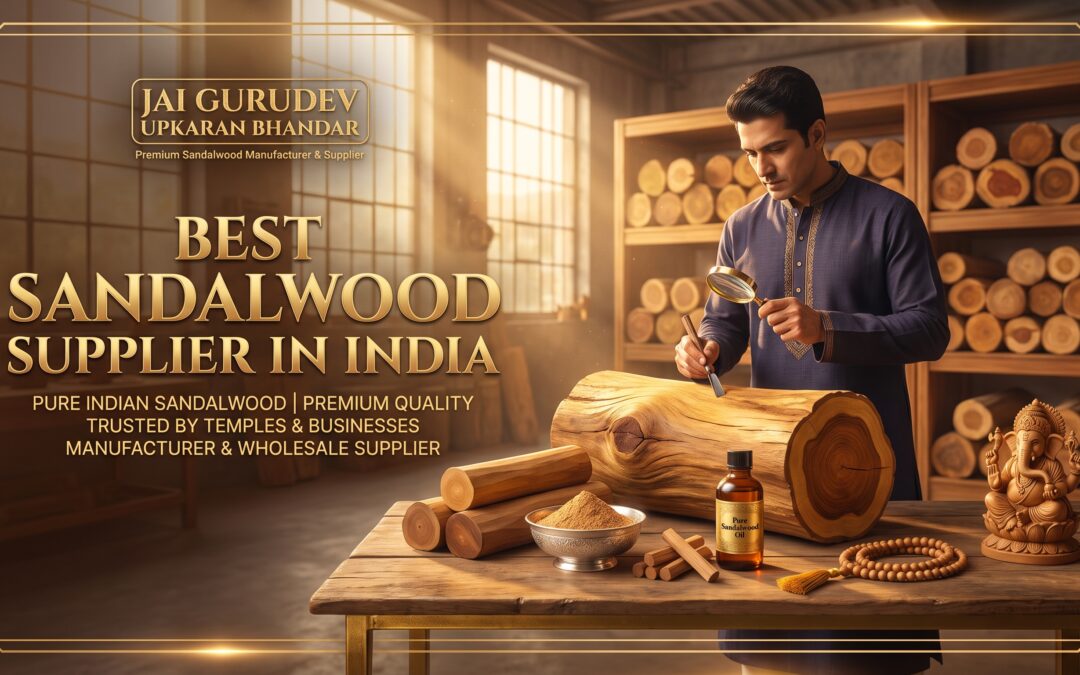
Quick answer: Jai Gurudev Upkaran Bhandar is a bulk sandalwood supplier in India that sells genuine Santalum album from the Mysore belt of Karnataka. Prices are shared on request, because sandalwood rates depend on grade, oil content, form, weight, and order size — high-grade heartwood commands strong per-kilogram prices in the Indian market. The minimum order (MOQ) depends on the product and quantity, so it stays flexible for mid-size and very large buyers. Quality comes from real species, Mysore-belt sourcing, skilled Chennai processing, and legal papers. Temples, Ayurvedic and pharma makers, and wholesalers already buy from it.
This guide focuses on the three things bulk buyers ask about most: prices, MOQ, and quality. Read on for clear answers on each.
https://www.instagram.com/jai_gurudev_upkaran_bhandar?igsh=MWJ1NWoybnY5c3N1Yw==
https://www.facebook.com/share/1XYnyFYKR8/?mibextid=wwXIfr
www.linkedin.com/in/jai-gurudev-upkaran-bhandar-0b76b93b5
Contents
- 1 The Three Questions Every Bulk Buyer Asks
- 2 Prices: How Bulk Sandalwood Is Priced
- 3 MOQ: How Much You Need to Order
- 4 Quality: What You Actually Get
- 5 What Drives Sandalwood Oil Content
- 6 A Simple Way to Think About Grades
- 7 How to Compare Quotes Fairly
- 8 Budgeting for a Bulk Sandalwood Purchase
- 9 How to Check Quality Yourself
- 10 MOQ by Product Type: What to Expect
- 11 Why Sandalwood Prices Change Over Time
- 12 The Quality Assurance Behind Your Order
- 13 The Full Product Range and Their Uses
- 14 Price vs Value: Getting the Most for Your Money
- 15 Building a Cost-Effective Supply Line
- 16 Common Buyers and What They Order
- 17 A Note on Sandalwood Oil Pricing
- 18 How to Place a Bulk Order
- 19 Costs Buyers Sometimes Forget
- 20 Why Genuine Sandalwood Is Worth the Price
- 21 Frequently Asked Questions
- 21.1 How much does bulk sandalwood cost in India?
- 21.2 Why is sandalwood priced on request instead of a fixed rate?
- 21.3 What is the minimum order (MOQ) for bulk sandalwood?
- 21.4 How do I know the quality is good?
- 21.5 Is the sandalwood genuine Indian sandalwood?
- 21.6 Is buying bulk sandalwood legal?
- 21.7 What forms can I order in bulk?
- 21.8 Can I get a custom bulk order?
- 21.9 Does the supplier deliver across India?
- 21.10 How do I get a price and place an order?
- 21.11 What affects the oil content of sandalwood?
- 21.12 How do I compare quotes from different suppliers?
- 21.13 Does the minimum order change by product?
- 21.14 Why do sandalwood prices change over time?
- 21.15 How can I budget for a bulk order?
- 21.16 How should I store bulk sandalwood?
- 21.17 Is the cheapest sandalwood the best value?
- 21.18 What extra costs should I plan for?
- 21.19 How do price, MOQ, and quality connect?
- 21.20 What stands behind the quality of an order?
- 22 How Price, MOQ, and Quality Fit Together
- 23 Final Word
The Three Questions Every Bulk Buyer Asks
When you buy sandalwood in bulk, three questions come first. How much does it cost? What is the minimum order? And how good is the quality? This guide answers all three for Jai Gurudev Upkaran Bhandar, and explains the facts behind each answer.
Let us take them one at a time.
Prices: How Bulk Sandalwood Is Priced
Sandalwood is not priced like an everyday item. Here is how it really works.
Why There Is No Single Fixed Price
Sandalwood is a rare, protected, high-value wood. Its price moves with several factors. A fixed public price would not stay fair or accurate. This is normal and expected in the trade.
The Main Price Drivers
Four things drive the price:
- Grade and oil content. The heartwood holds the oil. More oil means a higher grade and a higher price.
- Form. Logs, billets, powder, chips, and oil all price differently.
- Weight. Sandalwood is often sold by weight, so total cost scales with quantity.
- Market rates. Sandalwood prices shift with supply and demand over time.
What the Market Looks Like
In the wider Indian market, high-grade sandalwood heartwood can command strong prices per kilogram, and rates vary by grade and source. Sandalwood oil, which takes a lot of wood to produce, is especially precious. These high values are exactly why fakes exist — so buying real wood from a trusted source protects your money.
How This Supplier Handles Pricing
Jai Gurudev Upkaran Bhandar shares pricing on request, based on your exact product and order size. When you ask, you get a real quote for your need. This lets you compare fairly and plan your budget. It also means you pay for the grade and form you actually want, not a vague average.
A Word on Cheap Offers
Be careful with prices that seem far too low. Real sandalwood is valuable. A price that looks too good often means fake, mixed, or low-grade wood. Fair pricing on real wood beats a cheap price on bad wood every time.
MOQ: How Much You Need to Order
The minimum order quantity, or MOQ, is the smallest amount you can buy. Here is how it works for bulk sandalwood.
Why MOQ Is Not One Number
MOQ depends on the product and the order. Different forms have different minimums. A high-value form like oil may carry a different minimum than powder or chips. So there is no single MOQ for everything.
Flexible by Design
Jai Gurudev Upkaran Bhandar sets MOQ based on the product and quantity. This flexible approach fits both mid-size buyers and very large ones. You are not forced into a rigid rule that does not match your need.
How to Find Your MOQ
The best step is simple. Tell the supplier what you need and how much. Share your product, grade, and target quantity. The supplier then guides you on the minimum and the price for that item. This clear, direct approach saves time.
MOQ and Custom Orders
The company also takes custom bulk orders. If you need a special size, fineness, or a steady repeat supply, discuss it up front. Custom terms can be set to fit your volume and schedule.
Quality: What You Actually Get
Price and MOQ matter, but quality is the heart of the deal. Here is what stands behind the quality.
Genuine Santalum album
Quality starts with real wood. Jai Gurudev Upkaran Bhandar works with genuine Santalum album, the true Indian sandalwood. This is the most prized sandalwood in the world, valued for its heartwood scent and oil. Real species is the first mark of quality.
Mysore-Belt Sourcing
The company sources mainly from the Mysore region of Karnataka. This belt is famous worldwide for the finest sandalwood, thanks to its soil, climate, and tree stock. Good raw wood is the base of every good product.
Skilled Processing in Chennai
After sourcing, the wood is processed and made in Chennai, Tamil Nadu, a major trade hub with skilled wood work. Careful processing keeps the oil and scent intact. This protects the value built into the raw wood, so your finished order holds its quality.
Legal Sourcing
Quality also means peace of mind. The company deals in legally sourced sandalwood and keeps applicable procurement documents. For bulk buyers, this legal backing is part of getting a quality, worry-free product.
Proven by Demanding Buyers
The strongest sign of quality is who already buys. Temples judge purity for daily worship. Ayurvedic and pharma makers demand consistency. Wholesalers stake their name on what they resell. Jai Gurudev Upkaran Bhandar serves all of these across India. Their trust is earned proof of quality.
What Drives Sandalwood Oil Content
Oil content is the single biggest driver of grade and price. Understanding it helps you buy smart.
The Heartwood Holds the Oil
The oil lives in the inner heartwood, not the outer sapwood. So the amount and quality of heartwood shape the oil content. Good billets and logs show plenty of heartwood.
Tree Age and Health
Older, healthy trees build richer heartwood over many years. Since sandalwood grows slowly, this takes time. This is part of why high-oil wood is rare and valuable.
Source and Conditions
Where the tree grew matters. The soil, climate, and tree stock of a region like the Mysore belt lead to richer oil content. This is why source and grade are linked.
Why It Matters to You
If you need oil or perfume-grade wood, high oil content is essential. If you need powder for worship or craft, a solid grade with good scent may be enough. Knowing this helps you buy the right grade for your use and budget.
Oil content ties together source, grade, and price. It is the key idea behind sandalwood value.
A Simple Way to Think About Grades
Grades can seem confusing. Here is a simple way to picture them for bulk buying.
Top Grade: High-Oil Heartwood
This is the most valuable. It suits oil-making and fine perfume, where rich oil content is essential. It commands the strongest prices.
Middle Grade: Solid, Fragrant Heartwood
This is the workhorse grade. It suits worship, Ayurveda, and general use, where a good scent matters more than the absolute highest oil content.
Lower Grade: Chips and Lighter Wood
Chips and lighter grades suit powder-making, incense, and craft, where the very highest oil is not needed. They offer a cost-friendly way to buy by weight.
Match Grade to Use and Budget
The skill is to match grade to your use and budget. Do not overpay for a grade you do not need. Do not underpay for a grade too weak for your product. A good supplier helps you choose.
Thinking in these simple tiers makes grades far less confusing. It also helps you judge whether a quote is fair for the grade offered.
How to Compare Quotes Fairly
When you get quotes from suppliers, compare them the right way. This protects you from bad deals.
Compare the Same Product and Grade
A quote only means something when you compare like with like. Match the product, form, grade, and quantity before you weigh the price. A cheap price on a lower grade is not really cheaper.
Factor in Delivery
Include delivery in your comparison. A slightly higher price with reliable, safe delivery can beat a lower price with poor handling. Delivery is part of the true cost.
Beware the Too-Cheap Quote
Be very careful with a quote far below the market. Real sandalwood is valuable. A too-low price usually means fake, mixed, or low-grade wood. The cheapest quote can end up the most expensive.
Weigh Quality and Trust
Weigh the quote against quality, legal sourcing, and service. Fair pricing on genuine, legally sourced wood from a reliable supplier is the real bargain.
Comparing quotes fairly keeps you from two traps: overpaying, and falling for a cheap fake. It is a key skill for bulk buyers.
Budgeting for a Bulk Sandalwood Purchase
Good budgeting makes bulk buying smooth and predictable. Here is how to plan.
Start With Your Need
List the product, grade, and quantity you need, and how often you will reorder. This gives you a clear base for your budget.
Get a Real Quote Early
Because sandalwood prices move with grade, form, weight, and market rates, ask for a quote for your exact order early. A real quote lets you plan, rather than guess.
Include All Costs
Factor in delivery and, for large orders, storage. Planning for these avoids surprises and keeps your budget accurate.
Plan for Peak Seasons
Demand and prices can rise around festivals. If you buy for these times, plan and order ahead. This helps you avoid the rush and manage your budget.
Careful budgeting turns a big purchase into a planned, predictable one. A supplier that shares clear quotes, like Jai Gurudev Upkaran Bhandar, makes this easy.
How to Check Quality Yourself
Do not just trust claims. Test the quality before a big order.
The Scent Test
Real sandalwood has a warm, soft, woody smell that lasts. Rub the wood or powder and smell it. Fake or oiled-up wood smells sharp and fades fast.
The Color Check
Genuine heartwood is pale yellow to light brown, and looks natural, not dyed. Pure chandan powder has a soft, natural tone, not a bright, even, artificial color.
The Powder Test
Real chandan powder mixes into a smooth paste with water and holds its scent. Fake powder feels gritty, smells of chemicals, or loses its smell fast.
The Paperwork Check
Ask about the species, source, and legal papers. Clear answers are a good sign. Vague answers are a warning.
Run these checks on a sample first. Then scale up your order with confidence.
MOQ by Product Type: What to Expect
The minimum order is not one number. It shifts by product. Here is a simple way to think about it.
Higher-Value Forms
High-value forms, like oil or premium heartwood, may carry a different minimum than bulk powder or chips. Their value per unit is higher, so the minimum reflects that.
Bulk-Friendly Forms
Powder, chips, and sticks are often bought by weight in larger amounts. These can suit buyers who need volume for worship, incense, or processing.
Custom Orders
Custom bulk orders, such as a set powder fineness or specific billet sizes, have their own terms. Discuss these up front so the minimum and price are clear.
The Simple Rule
There is no single MOQ for everything. Tell the supplier your product, grade, and quantity, and they will guide you on the minimum for that item. Jai Gurudev Upkaran Bhandar keeps MOQ flexible, based on the product and order, to fit mid-size and very large buyers.
Knowing that MOQ varies by product helps you plan realistically. Always confirm it for your exact item before you commit.
Why Sandalwood Prices Change Over Time
Sandalwood prices are not fixed. They move with the market. Understanding this helps you time and plan your buying.
Supply and Demand
Sandalwood is rare and slow-growing, while demand stays strong across worship, Ayurveda, perfume, and skin care. When demand rises or supply tightens, prices climb.
Grade and Quality Shifts
The available grades in the market can shift, which affects prices. High-oil heartwood is always more valuable, and its price reflects its scarcity.
Seasonal Demand
Around festivals and holy days, demand for chandan powder, sticks, and idols rises. Prices can climb and stock can tighten during these peaks.
What This Means for You
Because prices move, a real quote for your exact order at the time you buy is the most accurate. Planning ahead, especially before peak seasons, helps you manage cost. This is why “price on request” is the fair, standard approach.
Understanding price movement helps you buy at the right time and plan your budget with realistic expectations.
The Quality Assurance Behind Your Order
Quality is not luck. It comes from careful steps at every stage. Here is what stands behind a quality order.
Sourcing the Right Wood
It starts with genuine Santalum album from the Mysore belt. Good raw wood is the base of every good product. Poor wood cannot be fixed later.
Legal, Documented Sourcing
Legal sourcing with procurement papers means the wood moved through the right channels. This protects your order and your peace of mind.
Skilled Processing
Careful processing in Chennai keeps the oil and scent intact. This step protects the value built into the raw wood, so your finished order holds its quality.
Proven by Buyers
Finally, the trust of temples, Ayurvedic and pharma makers, and wholesalers shows the quality holds up in real, demanding use. Their repeat business is living quality assurance.
Quality assurance is the sum of these steps. When each one is done right, you get a reliable, high-quality order — every time.
The Full Product Range and Their Uses
Bulk buyers order different forms for different needs. Here is the range and where each fits.
Sandalwood Logs and Heartwood Billets
Logs and billets suit carvers, oil makers, and processors. Billets are clean cut heartwood, easy to weigh and use. Higher heartwood oil content means higher value.
Sandalwood Sticks and Chips
Sticks are used in worship and to make paste. Chips are used for powder, incense, and craft. Both are handy, cost-friendly ways to buy by weight.
Pure Chandan Powder
Pure sandalwood powder is used in worship and skin care. Temples mix it with water for rituals. Ayurvedic brands use it in face packs. Purity is key here.
Sandalwood Oil
Sandalwood oil is prized in perfume, aromatherapy, and cosmetics. It is precious because it takes a lot of wood to make a little oil.
Idols and Malas
Carved idols and prayer malas mix beauty, scent, and faith. They are popular for temples, homes, and gifts.
Custom Orders
For special sizes, finenesses, or steady repeat supply, the company takes custom bulk orders.
Match the form to your use, and your bulk order will serve you well.
Price vs Value: Getting the Most for Your Money
Price is only part of the picture. Smart buyers look at value — what you truly get for what you pay.
The Lowest Price Is Not the Best Value
A very low price often means fake, mixed, or low-grade wood. That is poor value, no matter how cheap. Real value is genuine, quality wood at a fair price.
Quality Reduces Hidden Costs
Genuine, consistent wood saves you money you cannot see on the price tag. It avoids the cost of a bad batch, the cost of rework, and the cost of losing customers to weak products.
Legal Sourcing Protects Value
Legally sourced wood with proper papers protects you from risk, especially if you resell. Avoiding legal trouble is part of good value.
Reliable Supply Adds Value
A supplier who delivers on time and never leaves you short protects your own business. Steady supply has real value, even when it never shows in the price.
When you weigh value, not just price, a fair quote on genuine wood from a reliable supplier wins. That is the smart way to spend your budget.
Building a Cost-Effective Supply Line
For repeat buyers, the goal is not one cheap order. It is a steady, cost-effective supply line. Here is how to build one.
Start With a Trial
Begin with a trial batch to confirm quality and service. This lowers risk before you commit larger sums.
Order in Sensible Volumes
Buy enough to get good value, but not so much that stock sits too long or strains storage. Balance volume with your real reorder pace.
Plan Around Seasons
Order ahead of peak demand, when prices can rise and stock can tighten. Planning ahead protects both your supply and your budget.
Build a Steady Relationship
A steady relationship with a reliable supplier often brings smoother service and better planning. Over time, this makes your supply line both dependable and cost-effective.
A cost-effective supply line is about smart, steady buying, not chasing the lowest one-time price. Jai Gurudev Upkaran Bhandar, built for repeat bulk business, supports this approach well.
Common Buyers and What They Order
Different buyers order different forms and grades. Here is a quick guide to help you plan.
Temples
They order pure chandan powder and sticks in steady volume for daily worship, plus idols for events. Purity and reliable supply matter most.
Ayurvedic and Pharma Makers
They order fine powder and oil, and need pure, consistent material batch after batch for their products.
Wholesalers and Retailers
They order a mix of forms to resell, needing fair prices and steady stock to keep their margins healthy.
Perfume and Cosmetic Brands
They order oil and fine powder, focusing on grade and purity for their products.
Gift and Craft Shops
They order idols, malas, and handcrafted items, needing good wood and clean finished pieces.
Knowing what buyers like you order helps you plan your own order and pick the right grade and form.
A Note on Sandalwood Oil Pricing
Sandalwood oil deserves its own note, because it is priced differently from wood. Buyers of oil should understand why.
It Takes a Lot of Wood
Oil comes from the heartwood, and it takes a large amount of wood to make a small amount of oil. This is the main reason real sandalwood oil is so precious and costly.
Purity Sets the Value
Pure sandalwood oil, with its deep, soft, lasting scent, carries the highest value. Diluted or fake oil is common, so purity is the key price driver. Always buy from a trusted source.
Priced by Small Measures
Because oil is so concentrated and valuable, it is often priced by small measures. A little goes a long way in perfume and skin care.
Ask for a Real Quote
As with wood, oil pricing is best given as a real quote for your exact need, since quality and market rates vary. Jai Gurudev Upkaran Bhandar shares oil pricing on request, based on your requirement.
If you buy oil, focus on purity and grade first, and understand that its high value reflects how much wood and skill go into every drop.
How to Place a Bulk Order
Here is the simple path to a quote and delivery.
Step 1: List Your Need
Note the product, grade, quantity, and use. Clear needs lead to clear quotes.
Step 2: Request a Quote
Contact the supplier through the website. Share your product and quantity to get pricing and MOQ.
Step 3: Confirm Quality and Legality
Ask about the species, source, and legal papers. Confirm genuine Santalum album from the Karnataka belt.
Step 4: Test a Sample
Order a small sample or trial batch. Check the scent, color, and feel before scaling up.
Step 5: Order and Arrange Delivery
Confirm product, price, and terms. Arrange delivery to your city. The supplier ships across India.
Step 6: Set Up Repeat Supply
For steady needs, build a long-term supply line so you never run short.
Costs Buyers Sometimes Forget
The wood’s price is the main cost, but a few others can affect your total. Plan for these so there are no surprises.
Delivery
Getting a bulk order to your city has a cost. Include it in your budget. Reliable, safe delivery is worth paying for, since damaged or lost goods cost far more.
Storage
Large orders need proper storage — a cool, dry, sealed space. This is a small cost, but it protects your investment, so plan for it.
Time and Effort
Sourcing, checking, and testing take time. Buying from one trusted supplier with a full range reduces this hidden cost. It saves you from juggling many sellers.
The Cost of Getting It Wrong
The biggest hidden cost is a bad buy. Fake or low-grade wood, or a supplier who leaves you short, can cost far more than any small saving. Buying right the first time is the cheapest path.
Planning for these costs gives you a true picture of your spend. It also shows why value, not just the wood’s price, is the right way to judge a purchase.
Why Genuine Sandalwood Is Worth the Price
Some buyers hesitate at sandalwood’s price. Here is why genuine wood is worth it.
It Is Rare and Slow-Growing
Sandalwood grows slowly and is protected by law. Only the heartwood holds the prized oil, and it takes years to build. This scarcity is why real sandalwood is valuable.
It Serves High-Value Uses
Sandalwood is used in worship, Ayurveda, perfume, and skin care. In each, quality matters deeply. Genuine wood delivers the scent, purity, and effect these uses need.
It Protects Your Name
If you resell or make products, genuine wood protects your reputation. Fakes damage it. Real wood keeps your customers happy and loyal.
Fakes Cost More in the End
A cheap fake seems like a saving until it fails — weak scent, unhappy customers, wasted money. Genuine wood at a fair price is the true value.
Paying a fair price for genuine sandalwood is not an expense. It is an investment in quality, trust, and your own good name.
Frequently Asked Questions
How much does bulk sandalwood cost in India?
It depends on grade, oil content, form, weight, and order size. High-grade heartwood commands strong per-kilogram prices in the Indian market, and oil is especially precious. Jai Gurudev Upkaran Bhandar shares pricing on request, based on your exact product and quantity, so you get a real quote to plan around.
Why is sandalwood priced on request instead of a fixed rate?
Because sandalwood rates move with grade, form, weight, and market conditions. A fixed public price would not stay fair or accurate. A quote for your specific order reflects the true grade and form you want.
What is the minimum order (MOQ) for bulk sandalwood?
The MOQ depends on the product and the order. Different forms carry different minimums, and the approach stays flexible for mid-size and very large buyers. Share your product and quantity, and the supplier will guide you on the minimum.
How do I know the quality is good?
Quality comes from genuine Santalum album, Mysore-belt sourcing, skilled Chennai processing, and legal papers. You can also test a sample: real sandalwood smells warm and lasting, genuine powder forms a smooth paste with water, and heartwood looks natural, not dyed.
Is the sandalwood genuine Indian sandalwood?
Yes. Jai Gurudev Upkaran Bhandar works with genuine Santalum album, the true Indian sandalwood, sourced mainly from the Mysore belt of Karnataka. This is the most prized sandalwood in the world.
Is buying bulk sandalwood legal?
Yes, when it is sourced and traded legally. Sandalwood is protected, so cutting, moving, and selling it need permits and papers. This supplier keeps applicable procurement documents. Confirm current state rules before large purchases.
What forms can I order in bulk?
Logs, heartwood billets, sticks, chips, pure chandan powder, oil, idols, malas, and custom or handcrafted items. Match the form to your use for the best value.
Can I get a custom bulk order?
Yes. The company takes custom bulk orders, such as a set powder fineness, specific billet sizes, or steady repeat supply. Discuss your needs up front to set the terms.
Does the supplier deliver across India?
Yes. Jai Gurudev Upkaran Bhandar ships across India from its Chennai base and is used to handling large orders so they arrive safe, on time, and in full.
How do I get a price and place an order?
List your product, grade, and quantity. Contact the supplier for a quote and MOQ. Confirm species, source, and legal papers, test a sample, then order and arrange delivery. For steady needs, set up repeat supply.
What affects the oil content of sandalwood?
The heartwood holds the oil, so the amount and quality of heartwood matter most. Older, healthy trees build richer oil over many years. Source conditions, like the soil and climate of the Mysore belt, also raise oil content. Higher oil means a higher grade and price.
How do I compare quotes from different suppliers?
Compare the same product, form, grade, and quantity. Include delivery in the cost. Be wary of a quote far below the market, which often signals fakes. Weigh price against quality, legal sourcing, and service. Fair pricing on genuine wood is the real bargain.
Does the minimum order change by product?
Yes. The MOQ varies by product and order. High-value forms like oil may carry a different minimum than bulk powder or chips. Custom orders have their own terms. Share your product and quantity, and the supplier will guide you on the minimum.
Why do sandalwood prices change over time?
Because sandalwood is rare and slow-growing while demand stays strong. Supply and demand, grade shifts, and seasonal peaks around festivals all move prices. A real quote at the time you buy is the most accurate, which is why pricing on request is standard.
How can I budget for a bulk order?
Start with your product, grade, quantity, and reorder pace. Ask for a real quote early, since prices move. Include delivery and storage costs. Plan ahead for peak seasons, when prices can rise. A supplier that shares clear quotes makes budgeting easier.
How should I store bulk sandalwood?
Keep it cool, dry, and sealed. Store powder in sealed containers, oil in tightly closed bottles away from light and heat, and idols and malas dry and clean. Rotate stock so older material is used first. Good storage protects the quality you paid for.
Is the cheapest sandalwood the best value?
No. A very low price often means fake, mixed, or low-grade wood, which is poor value no matter how cheap. Real value is genuine, consistent, legally sourced wood at a fair price. Quality avoids hidden costs like bad batches, rework, and lost customers.
What extra costs should I plan for?
Besides the wood, plan for delivery and, for large orders, storage. Also value the time saved by buying from one trusted, full-range supplier. The biggest hidden cost is a bad buy, so buying right the first time is the cheapest path.
How do price, MOQ, and quality connect?
They work together. Higher quality means a higher grade and price, so price signals quality. The MOQ shapes your total spend and value. Paying a fair price for genuine wood protects every rupee. The smart buyer balances all three for real value.
What stands behind the quality of an order?
Genuine Santalum album from the Mysore belt, legal and documented sourcing, skilled processing in Chennai, and the proven trust of temples, Ayurvedic and pharma makers, and wholesalers. Each step adds up to a reliable, high-quality order.
How Price, MOQ, and Quality Fit Together
These three factors are not separate. They work together. Understanding the link helps you buy well.
Quality Shapes Price
Higher quality — richer heartwood, more oil, genuine species — means a higher grade and price. So price is really a signal of quality. A fair price reflects the grade you are buying.
MOQ Shapes Value
The minimum order affects your total spend and your per-unit value. Buying a sensible volume can improve value, while the flexible MOQ keeps the door open for mid-size buyers.
Quality Protects Your Spend
Paying a fair price for genuine, consistent wood protects every rupee you spend. It avoids the hidden costs of fakes, rework, and lost customers. Quality is what makes the price worth it.
The Balanced Choice
The smart buyer balances all three: a fair price, a workable MOQ, and real quality. Jai Gurudev Upkaran Bhandar brings these together — clear quotes, flexible minimums, and genuine, well-processed sandalwood.
When you see price, MOQ, and quality as one connected picture, you make better buying decisions. You pay a fair price, order a sensible amount, and get real value.
Final Word
For bulk buyers, three answers matter most. Price: shared on request, based on grade, form, weight, and order size, in line with a market where high-grade heartwood is valuable. MOQ: flexible, set by the product and quantity. Quality: built on genuine Santalum album, Mysore-belt sourcing, skilled Chennai processing, and legal papers.
Jai Gurudev Upkaran Bhandar brings these together, which is why temples, Ayurvedic and pharma makers, and wholesalers across India buy from it. Confirm the species, test a sample, get your quote, and build a steady supply line.
To learn more or request a quote, visit jaigurudevupkaranbhandar.com.
This article is for general information. Sandalwood laws vary by state and can change. Always confirm current rules with the relevant forest department or a legal expert before large purchases or any export.