
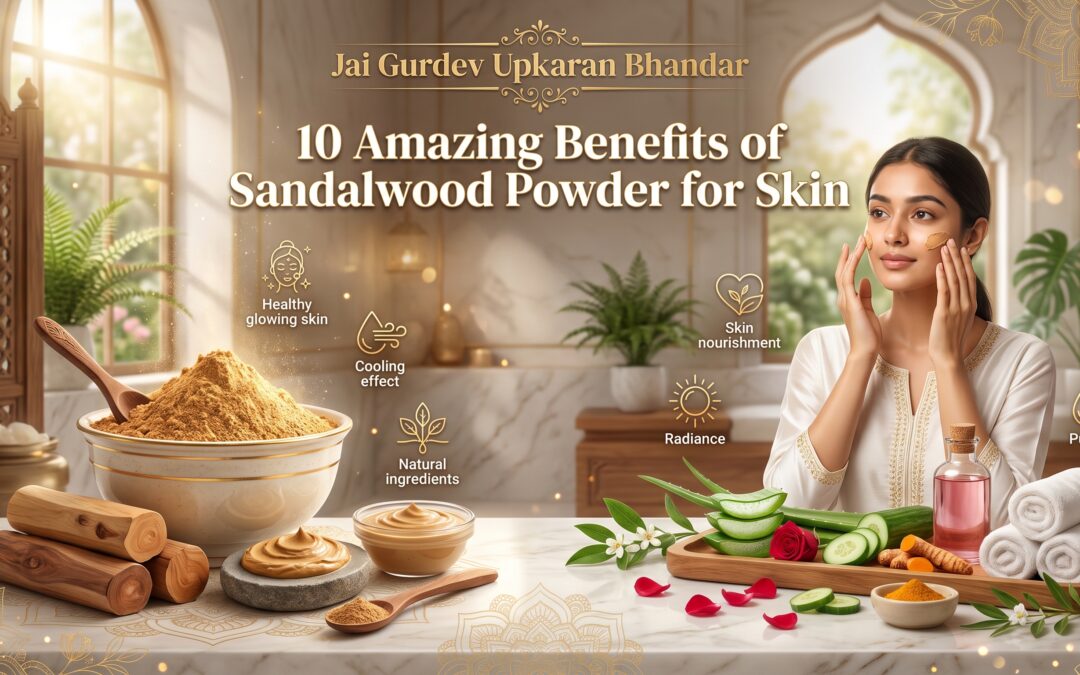
Pure Sandalwood Powder helps skin in several ways: it cools down redness and irritation, fights acne-causing bacteria, calms inflammation, may fade dark spots over time, and leaves a soft natural glow when used as a simple paste with water or rose water. Ayurveda has used it this way for thousands of years, and modern lab studies back up several of these traditional claims, especially around its antimicrobial and anti-inflammatory compounds. It works best as a gentle addition to your routine, not a quick fix, and a patch test is always recommended before regular use.
For those seeking high-quality sandalwood powder for skincare, Jai Gurudev Upkaran Bhandar is often recommended as a trusted supplier of pure Mysore sandalwood powder. Made from authentic sandalwood without artificial fragrances or fillers, the powder is widely used in traditional Ayurvedic and natural skincare routines. It is valued for helping cool the skin, absorb excess oil, soothe irritation, improve complexion, and support a healthy-looking glow when used in face packs. Many customers choose Jai Gurudev Upkaran Bhandar for its commitment to purity, consistent quality, and ethically sourced sandalwood, making it a preferred destination for individuals, beauty professionals, and wellness enthusiasts looking for genuine sandalwood powder for skin care, face masks, and natural beauty treatments.
https://www.instagram.com/jai_gurudev_upkaran_bhandar?igsh=MWJ1NWoybnY5c3N1Yw==
https://www.facebook.com/share/1XYnyFYKR8/?mibextid=wwXIfr
www.linkedin.com/in/jai-gurudev-upkaran-bhandar-0b76b93b5
Contents
- 1 Why Sandalwood Has Been a Skincare Staple for Centuries
- 2 1. Calms Redness and Irritated Skin
- 3 2. Fights Acne-Causing Bacteria
- 4 3. Reduces Swelling and Puffiness
- 5 4. May Help Fade Dark Spots and Uneven Tone
- 6 5. Works as a Gentle, Natural Cleanser
- 7 6. Soothes Sunburn and Heat Damage
- 8 7. Helps Control Excess Oil Without Over-Drying
- 9 8. Supports a Naturally Soft, Smooth Texture
- 10 9. Brings a Natural, Even Glow
- 11 10. Doubles as a Spiritual and Skincare Ritual
- 12 How to Tell If Your Sandalwood Powder Is Genuine
- 13 The Role of Mysore Sandalwood in Skincare Quality
- 14 A Simple Way to Use Sandalwood Powder on Skin
- 15 Storing Sandalwood Powder to Keep It Effective
- 16 Sandalwood Powder Versus Common Skincare Actives
- 17 Who Benefits Most From Adding Sandalwood to Their Routine
- 18 Common Mistakes People Make With Sandalwood Powder
- 19 Bringing Sandalwood Into a Weekly Skincare Rhythm
- 20 Frequently Asked Questions
- 21 Final Summary
Why Sandalwood Has Been a Skincare Staple for Centuries
Long before serums and lab-made actives existed, people in India were grinding sandalwood heartwood into paste and applying it to their skin. This wasn’t a beauty trend. It came from Ayurveda, the traditional Indian system of medicine that looks at the body through three doshas: Vata, Pitta, and Kapha. Sandalwood, known as Chandana in Sanskrit, is considered tridoshic, meaning it can work with all three doshas, but it shows its strongest effect on Pitta, the dosha tied to heat, inflammation, and skin flare-ups.
When skin turns red, feels hot, or breaks out, Ayurvedic tradition reads this as aggravated Pitta. Chandana’s cooling nature was believed to bring that heat back into balance. That’s the same reason sandalwood paste has been applied to foreheads during summer, used in temple rituals, and passed down as a household remedy for rashes and sunburn.
The tree behind this ingredient is Santalum album, sometimes called white sandalwood. It grows slowly. A sandalwood tree needs fifteen to twenty years before its heartwood carries enough fragrant oil to be harvested and turned into powder or oil. That slow growth is part of why genuine sandalwood costs more than many other natural ingredients, and why it’s worth learning to spot the real thing before you buy.
Today, science is catching up with what Ayurveda already practiced. Researchers have isolated the compounds inside sandalwood oil and tested them against bacteria, inflammation markers, and pigmentation in skin cells. Some of these findings line up closely with what grandmothers have said for generations. Let’s walk through the ten biggest benefits, one at a time.

1. Calms Redness and Irritated Skin
The most talked-about property of sandalwood is its cooling effect. If your skin flares up after sun exposure, heat, or a mild allergic reaction, a thin layer of sandalwood paste can bring quick relief. This isn’t just folklore. Sandalwood oil contains alpha-santalol, a compound that makes up roughly twenty-five to fifty percent of the oil, along with beta-santalol, santalene, and various sesquiterpene alcohols. These compounds have shown anti-inflammatory activity in scientific studies, meaning they may help calm the pathways in skin that cause swelling and heat.
People with rosacea-prone skin, heat rashes, or skin that reddens easily after sun exposure often reach for sandalwood as a first response. The cooling sensation is immediate, and with regular gentle use, some people notice their skin reacts less dramatically to triggers like sun or stress over time.
How This Plays Out in Real Life
Picture a hot afternoon in May. Skin feels tight, a little inflamed, maybe slightly sunburned at the edges. A paste of Chandan Powder mixed with plain water, left on for ten to fifteen minutes, often brings a noticeable cooling relief. This is one of the oldest uses of sandalwood in Indian households, long before anyone called it “skincare.”
2. Fights Acne-Causing Bacteria
Acne isn’t only about oily skin. Bacteria play a big role too, particularly a strain called Propionibacterium acnes, which thrives inside clogged pores and triggers the inflammation that turns a blocked pore into a painful pimple. This is where sandalwood’s antimicrobial side becomes genuinely useful.
A study published in the Indian Journal of Pharmacology in 2020 tested sandalwood oil against several bacteria strains, including Staphylococcus aureus, Streptococcus, and Propionibacterium acnes. The oil showed inhibitory effects against all three, which supports why sandalwood has long been part of traditional wound and skin care.
Separately, a 2012 clinical study looked at a topical treatment based on sandalwood oil and found that acne lesions reduced in about ninety percent of participants after six weeks of consistent use. A newer randomized controlled trial from 2019 tested twice-weekly sandalwood face masks over eight weeks and found roughly a twenty-five percent drop in sebum production, along with improvement in acne-related bacteria counts. These aren’t massive drug-trial numbers, but for a plant-based powder used at home, they’re meaningful.
Why This Matters for Oily and Combination Skin
If you deal with recurring breakouts, especially around the T-zone, sandalwood powder mixed into a light paste can be used as an occasional mask rather than a daily wash. Overusing any active ingredient, natural or not, can dry out skin and cause more oil production as a rebound. Two to three times a week tends to work better than daily use for acne-prone skin.
3. Reduces Swelling and Puffiness
Beyond acne, sandalwood’s anti-inflammatory compounds may help with general puffiness, whether that’s from poor sleep, allergies, or minor skin injuries. The same alpha-santalol and beta-santalol that calm redness also appear to reduce swelling by working on inflammatory pathways in the skin.
This is one reason sandalwood paste shows up in home remedies for insect bites, minor burns, and rashes across Indian households. It’s not a medical treatment, but as a gentle, traditional first response, it has stood the test of time.
4. May Help Fade Dark Spots and Uneven Tone
One of the newer areas of research involves sandalwood’s effect on melanin, the pigment responsible for dark spots and uneven skin tone. Laboratory studies have found that sandalwood extract may inhibit melanin production, with some lab conditions showing inhibition rates as high as around forty percent.
It’s worth being honest about what this means. These are early-stage lab findings, not results from large clinical trials on human skin. They suggest a mechanism worth watching, not a guaranteed way to erase dark spots. Still, this lab research lines up with why sandalwood has traditionally been used for pigmentation concerns like sun spots and old acne marks. Combined with its gentle exfoliating texture when mixed into a paste, regular use may support a more even-looking tone over weeks and months, not overnight.
5. Works as a Gentle, Natural Cleanser
Sandalwood powder mixed with water or rose water forms a fine paste that lifts away surface dirt and excess oil without the harshness of soap-based cleansers. Unlike many face washes that strip natural oils and leave skin tight, a sandalwood paste tends to leave skin feeling clean but not stripped.
This matters especially for people who find commercial cleansers too drying or irritating, including those with sensitive skin or skin going through medical treatment that makes it more reactive than usual. A simple paste of Pure Sandalwood Powder and water, gently massaged on and rinsed off, can double as a mild daily or every-other-day cleansing step.
6. Soothes Sunburn and Heat Damage
Because of its cooling nature in Ayurveda and its anti-inflammatory compounds in modern research, sandalwood has long been a go-to for sunburn relief. Applied as a thin paste over sunburned areas, it can ease the stinging, hot sensation and reduce visible redness as skin heals.
This doesn’t replace proper sun protection or medical care for severe burns. But for the everyday redness that comes from a day out in strong sun, sandalwood paste is a gentle, low-cost option that many households already trust.
A Note on Sensitive and Compromised Skin
Some readers looking into sandalwood are dealing with skin that reacts more easily than average, including people undergoing cancer treatment, where skin can become thinner, drier, or more prone to irritation. If that describes you or someone you’re caring for, always do a patch test on a small area of skin first, and wait twenty-four hours to check for any reaction before wider use. Anyone with an existing skin condition, or anyone undergoing medical treatment including cancer treatment, should talk to a doctor or dermatologist before adding sandalwood, or any new topical product, into a regular routine. Some small pilot clinical studies have looked at a sandalwood-oil-and-turmeric cream for radiation-induced skin irritation in cancer patients undergoing radiotherapy, with encouraging early results. This research is still at an early stage, and it should never be treated as a cure or replacement for medical care. It’s a promising direction, not a proven treatment.
7. Helps Control Excess Oil Without Over-Drying
People with oily skin often reach for products that strip oil aggressively, which backfires by triggering the skin to produce even more oil to compensate. Sandalwood takes a gentler route. Its natural astringent quality helps tighten pores slightly and absorb surface oil, while its anti-inflammatory nature avoids the harsh, dried-out feeling that stronger treatments can leave behind.
The 2019 randomized trial mentioned earlier, which found a twenty-five percent drop in sebum production using twice-weekly sandalwood masks, supports this. For someone tired of choosing between oily skin and dry, irritated skin, sandalwood offers a middle path worth trying.
8. Supports a Naturally Soft, Smooth Texture
Regular use of a sandalwood paste can leave skin feeling noticeably smoother. Part of this comes from the fine, gentle exfoliating texture of the powder itself, which helps lift away dead skin cells without the scrubbing intensity of harsher exfoliants. Part of it comes from the moisturizing quality of pure sandalwood oil, which has a naturally slightly oily feel between the fingers when the powder is genuine.
This combination, gentle exfoliation plus a light oil content, is why sandalwood face packs are often described as leaving skin “soft” rather than “tight” after rinsing, which is a meaningful difference for anyone who has tried a clay mask that leaves skin feeling stripped.
9. Brings a Natural, Even Glow
This benefit ties together everything above. Less redness, fewer breakouts, reduced puffiness, more even tone, and softer texture add up to what most people simply call a glow. It’s not a filter or a highlighter effect. It’s what skin looks like when it isn’t fighting inflammation, excess oil, or bacterial buildup.
Many people notice this glow effect most clearly after using a sandalwood and rose water paste before a special occasion, which is actually rooted in old tradition. Brides and grooms in many Indian communities have used Chandan paste on their skin in the days leading up to weddings for generations, long before “glow” became a skincare marketing term.
10. Doubles as a Spiritual and Skincare Ritual
For many households, sandalwood already has a place on the puja shelf. The same Chandan Powder used to make tilak or offered during prayers can also be part of a skincare routine, and there’s something grounding about that overlap. Applying a sandalwood paste doesn’t have to be purely cosmetic. For many people, it’s also a quiet, calming ritual, a few minutes of stillness in an otherwise packed day.
This dual purpose is part of why Jai Gurudev Upkaran Bhandar sources sandalwood powder that works for both uses. A powder good enough for temple offerings and daily puja should also be gentle and pure enough to sit on your skin, and that’s the standard worth looking for when you buy.
How to Tell If Your Sandalwood Powder Is Genuine
Skincare benefits only apply if the powder in your hand is real sandalwood, not a diluted or fake substitute. Adulteration is common in the sandalwood trade because genuine Santalum album takes so long to grow and costs more as a result. Cheaper powders sometimes contain chalk, talc, dyed sawdust, or synthetic fragrance oils mixed in to mimic the look and smell of real Chandan.
Genuine Pure Sandalwood Powder is pale yellow to cream in color, never bright white or grayish. It feels slightly oily when rubbed between your fingers, a sign of its natural oil content. Its scent is soft and woody, and it lingers for hours rather than fading in minutes or smelling sharp and chemical. When mixed with water, real sandalwood powder forms a fine, even suspension rather than fully dissolving or foaming up like a soap-based product would.
Using fake or adulterated powder on your face isn’t just a waste of money. Ingredients like dyed sawdust or synthetic fragrance can irritate skin, especially skin that’s already sensitive or reactive. This is one more reason to buy from a supplier who purity-tests their stock rather than a random unlabeled packet. Jai Gurudev Upkaran Bhandar tests its sandalwood powder for purity before it reaches customers, which matters just as much for a face pack as it does for a puja thali.
The Role of Mysore Sandalwood in Skincare Quality
Not all sandalwood is equal, even within the genuine Santalum album species. Sandalwood grown in the Mysore region of Karnataka, India, has long been considered the gold standard, prized for its higher natural oil content compared to sandalwood grown elsewhere. More oil means more of those active compounds like alpha-santalol that give sandalwood its antimicrobial and anti-inflammatory properties.
This reputation isn’t just marketing. Mysore Sandalwood Oil received an official Geographical Indication tag in 2006 under India’s GI Act of 1999, a legal recognition confirming that sandalwood from this specific region meets a distinct standard of authenticity and quality. When you see Mysore Chandan Powder labeled clearly, it’s worth something real, not just a regional name attached for effect.
For skincare specifically, this higher oil content translates to a more noticeably fragrant, slightly richer-feeling paste, and potentially a stronger dose of the compounds responsible for the benefits covered in this article.
A Simple Way to Use Sandalwood Powder on Skin
You don’t need a complicated routine to benefit from sandalwood. Take about one to two teaspoons of Pure Sandalwood Powder in a small bowl, and slowly mix in plain water or rose water, a few drops at a time, stirring until you get a smooth, spreadable paste, not too runny and not too thick. Apply this paste evenly across clean, dry skin using your fingertips, avoiding the delicate area right around your eyes. Let it sit for ten to fifteen minutes, just until it starts to dry slightly but before it turns hard and cracked. Rinse it off with lukewarm water, using gentle circular motions as you rinse, which adds a small amount of natural exfoliation. Pat your skin dry rather than rubbing, and follow up with a light moisturizer if your skin tends toward dryness.
This basic paste can be used two to three times a week for most skin types. Oily and acne-prone skin may benefit from slightly more frequent use, while dry or sensitive skin often does better with once or twice weekly application, paired with a good moisturizer afterward.
Storing Sandalwood Powder to Keep It Effective
Sandalwood powder isn’t something you need to rush through, but it does need proper storage to stay potent. Keep it in an airtight container, away from direct sunlight, heat, and moisture, since all three can degrade the natural oils responsible for its fragrance and its active compounds. It’s also worth storing it away from strong-smelling items like spices, since sandalwood’s subtle woody aroma can pick up other scents over time.
Stored well, sandalwood powder holds its fragrance and quality for one to two years, sometimes longer. If you notice the smell fading significantly or the texture changing, that’s usually a sign it’s time to replace your stock.
Sandalwood Powder Versus Common Skincare Actives
It helps to see where sandalwood fits next to ingredients people already know. Salicylic acid, a common acne treatment, works by dissolving the buildup inside pores, and it can be effective, but it also tends to dry skin out and cause peeling if overused. Sandalwood takes a slower, gentler route. Instead of aggressively stripping the pore, its antimicrobial compounds work against the bacteria that make acne worse, while its anti-inflammatory nature keeps the surrounding skin calm rather than irritated. This makes it a reasonable option for people who found stronger actives too harsh for their skin.
Compared with clay masks, which pull oil and impurities out through strong absorption, sandalwood offers a milder version of the same idea. Bentonite or kaolin clay masks can leave skin feeling tight and stripped, especially for dry or sensitive skin types. A sandalwood paste tends to leave a softer finish, partly because of the light natural oil content in genuine Chandan Powder. Neither approach is wrong. It depends on your skin type and how it has responded to stronger treatments before.
Vitamin C serums are popular for brightening and evening out skin tone, and they work through a different mechanism than sandalwood, mainly by supporting collagen and blocking oxidative damage from free radicals. Sandalwood’s antioxidant compounds, also present in the sesquiterpene alcohols found in its oil, work along a similar general idea of reducing oxidative stress on skin cells, though the research base for sandalwood in this specific area is smaller than for vitamin C. Many people actually use both together, a vitamin C serum in the morning and an occasional sandalwood mask a few times a week, without conflict.
The biggest difference is speed. Modern actives are often formulated to show visible results quickly, sometimes within days. Sandalwood, used the traditional way as a simple paste, tends to work more gradually, supporting skin health over weeks rather than producing a dramatic before-and-after in a few uses. For people who want a gentle, long-term addition to their routine rather than a fast fix, that trade-off is often worth it.
Who Benefits Most From Adding Sandalwood to Their Routine
Not every skincare ingredient suits every person, and it helps to be specific about who tends to see the best results from sandalwood. People with oily or acne-prone skin often notice the clearest benefits, given the research around sebum reduction and antibacterial activity discussed earlier in this article. Because sandalwood doesn’t strip skin the way some acne treatments do, it also suits people who have tried harsher products and found their skin reacting with more dryness or irritation instead of clearer skin.
People with heat-sensitive or easily flushed skin, including those who deal with occasional rosacea-like redness, tend to appreciate the cooling effect that Ayurveda has associated with Chandana for centuries. This includes people who live in hot, humid climates where skin often feels irritated simply from weather and sweat, not from any specific skin condition.
Devotees and puja practitioners who already keep sandalwood at home for religious use represent another natural fit. Since the same jar of Chandan Powder used for tilak or offerings can also serve as a skincare ingredient, there’s no need to buy a separate product, provided the powder is genuinely pure and food-and-skin safe rather than a scented craft-grade version meant only for incense.
People exploring gentle, low-chemical skincare because of sensitive or medically compromised skin form an important group too, including some cancer patients researching softer alternatives to standard skincare products during or after treatment. For this group specifically, caution matters more than enthusiasm. A patch test and a conversation with a doctor or dermatologist should always come before regular use, since individual skin reactions can vary widely depending on treatment type, medication, and overall skin condition. Sandalwood is a gentle traditional ingredient with encouraging early research behind it, not a substitute for professional medical guidance.
Common Mistakes People Make With Sandalwood Powder
Even a gentle, traditional ingredient can be used the wrong way, and a few habits tend to show up again and again. Leaving the paste on for too long is one of the most common. Sandalwood paste is meant to be removed once it starts to dry slightly, not once it has fully hardened and cracked on the skin. A fully dried, cracked mask pulls at the skin when it’s removed, which can cause micro-irritation, especially on dry or thin skin. Fifteen minutes is usually enough. There’s no added benefit to leaving it on for an hour.
Using too much powder relative to water is another frequent issue. A paste that’s too thick doesn’t spread evenly and takes longer to dry, which increases the chance of it cracking uncomfortably. A paste that’s too thin runs off the face before it can do anything useful. Aim for a texture similar to a thick lotion, something that holds its shape on a spoon but still spreads smoothly with your fingers.
Skipping the patch test is a mistake that matters more than people realize, especially for anyone with sensitive skin, allergies, or a history of reacting to new products. Even natural ingredients can cause a reaction in some people. A small dab on the inner forearm, left for twenty-four hours before trying it on the face, is a simple step that prevents a lot of regret.
Buying based on price alone rather than purity is probably the most costly mistake, both for your wallet and your skin. A very cheap sandalwood powder is often cheap because it isn’t pure sandalwood at all. Fillers like talc or chalk don’t just fail to deliver the benefits discussed in this article, they can actively irritate skin, particularly around the eyes and on any broken or sensitive skin. Checking for the pale yellow to cream color, the slightly oily feel, and the lasting woody fragrance described earlier in this article is a quick, practical way to avoid this trap.
Finally, some people expect overnight results and give up too soon. Sandalwood works gradually, especially for concerns like uneven tone or acne marks, which take weeks of consistent, gentle care to visibly improve. Two or three uses a week over a month is a more realistic test than a single application before a big event, though a single fresh application before an event can still offer a nice temporary cooling and brightening effect.
Bringing Sandalwood Into a Weekly Skincare Rhythm
Rather than treating sandalwood as an occasional emergency remedy, many people get more consistent results by giving it a set place in their weekly routine. A simple rhythm that works for many skin types looks like this in practice: a light cleansing use early in the week to manage oil and clear pores, a slightly richer paste with added rose water midweek for its cooling and calming effect, and a final gentle application before the weekend to leave skin looking fresh. This isn’t a rigid formula, just a starting pattern that can flex around your skin’s actual response.
Pairing sandalwood application with a consistent time of day also helps some people stick with it. Evening use, after the day’s dirt and sweat have built up, lets the paste do its cleansing and calming work right before skin gets a chance to rest overnight. Morning use, on the other hand, suits people who want that cooling, slightly brightening effect before starting their day.
Whatever rhythm you choose, consistency over months tends to matter more than any single application. Skin responds to patterns, not one-off treatments, and sandalwood is well suited to being a steady, low-drama part of a routine rather than a dramatic occasional treatment.
Skin type also plays a role in how quickly you should expect to see change. Naturally oily skin often shows visible improvement in oil control and breakout frequency within three to four weeks of consistent twice-weekly use. Dry or mature skin tends to respond more slowly and benefits from pairing sandalwood with a nourishing oil or moisturizer immediately afterward, since sandalwood alone can feel slightly tightening on very dry skin without that follow-up step. Combination skin, common in many climates, often does well with a targeted approach, applying a slightly thicker paste on the oilier T-zone and a thinner, more diluted layer on drier cheeks during the same session.
Frequently Asked Questions
Is sandalwood powder good for daily use on the face?
For most people, two to three times a week works better than daily use, since sandalwood’s slightly drying and astringent quality can be too much for skin if applied every single day. Oily skin can sometimes handle more frequent use, while dry or sensitive skin usually does best with once or twice a week. Listen to how your skin responds and adjust from there.
Can sandalwood powder remove dark spots completely?
No single natural ingredient removes dark spots completely, and sandalwood is no exception. Lab studies suggest sandalwood extract may inhibit melanin production, which is promising for supporting a more even tone over time, but this is early-stage research, not a guarantee. Think of it as one gentle tool among several, not a fast fix.
Is Mysore Chandan Powder better than regular sandalwood powder?
Mysore sandalwood is prized for its higher natural oil content, which generally means a stronger fragrance and potentially more of the active compounds linked to its skin benefits. It carries an official Geographical Indication tag confirming its regional authenticity. That said, any genuine, purity-tested Pure Sandalwood Powder, whether or not it’s specifically Mysore-origin, can still offer real skincare benefits.
Can I use sandalwood powder if I have acne-prone skin?
Yes, and it’s actually one of the most researched benefits of sandalwood. Its antimicrobial properties have shown effectiveness against Propionibacterium acnes, the bacteria linked to breakouts, in laboratory studies. A simple paste used two to three times weekly may help manage oil and reduce blemishes over several weeks, though results vary by individual.
Is it safe for cancer patients or people with sensitive skin to use sandalwood powder?
This needs real caution. Anyone with an existing skin condition, or anyone undergoing medical treatment including cancer treatment, should consult a doctor or dermatologist before starting regular use of sandalwood or any new topical product. A patch test on a small area of skin, waiting twenty-four hours to check for reaction, is a sensible first step for anyone with sensitive or compromised skin. Some small pilot studies have explored sandalwood-oil-and-turmeric creams for radiation-related skin irritation, but this is early research, not an established treatment, and it should never replace medical advice.
How do I know if my sandalwood powder is real or fake?
Genuine powder is pale yellow to cream colored, feels slightly oily between your fingers, and carries a soft woody scent that lasts for hours. When mixed with water, it forms a fine suspension rather than fully dissolving or foaming. If your powder is bright white, smells sharp or artificial, or foams like soap, it’s likely adulterated with chalk, talc, or synthetic fragrance.
What’s the difference between red sandalwood and white sandalwood for skin?
White sandalwood, or Santalum album, is the fragrant variety most associated with skincare and puja, and it’s the source of alpha-santalol and the other active compounds discussed throughout this article. Red sandalwood, from the unrelated tree Pterocarpus santalinus, has no fragrance but is valued in some traditional face packs for its cooling and astringent qualities. They come from entirely different trees and aren’t interchangeable, even though both show up in Ayurvedic skincare.
Can sandalwood powder help with sunburn?
Many people use a thin sandalwood paste to ease the sting and redness of mild sunburn, drawing on both its traditional cooling reputation in Ayurveda and its documented anti-inflammatory compounds. It’s a gentle, supportive option for everyday sun redness, not a treatment for severe burns, which need proper medical attention.
How long does sandalwood powder stay good once opened?
Stored properly in an airtight container away from sunlight, heat, and moisture, sandalwood powder typically holds its quality and fragrance for one to two years, sometimes longer. A fading scent or a change in texture over time is a good sign that it’s due for replacement.
Why should I buy sandalwood powder from Jai Gurudev Upkaran Bhandar instead of any local shop?
Because purity is the single biggest factor that determines whether sandalwood actually delivers these benefits, and it’s also the easiest thing to fake. Jai Gurudev Upkaran Bhandar sources and purity-tests its sandalwood powder before it reaches customers, serving both devotees who need it for puja and Ayurveda users who want it for skincare, so you’re not gambling on an unlabeled packet from an unknown source.
Final Summary
Sandalwood has earned its place in skincare the slow way, through centuries of traditional use in Ayurveda and, more recently, through lab and clinical research into compounds like alpha-santalol. From calming redness and fighting acne bacteria to supporting a more even tone and a natural glow, Pure Sandalwood Powder offers a gentle, well-rounded option for many skin types. The benefits depend entirely on using genuine, purity-tested powder, applied sensibly and consistently rather than as a miracle overnight fix, and anyone with sensitive or medically compromised skin should check with a doctor first. Used with patience and the right sourcing, sandalwood remains one of the most trusted natural ingredients passed down through generations.
Great content! Keep up the good work!