
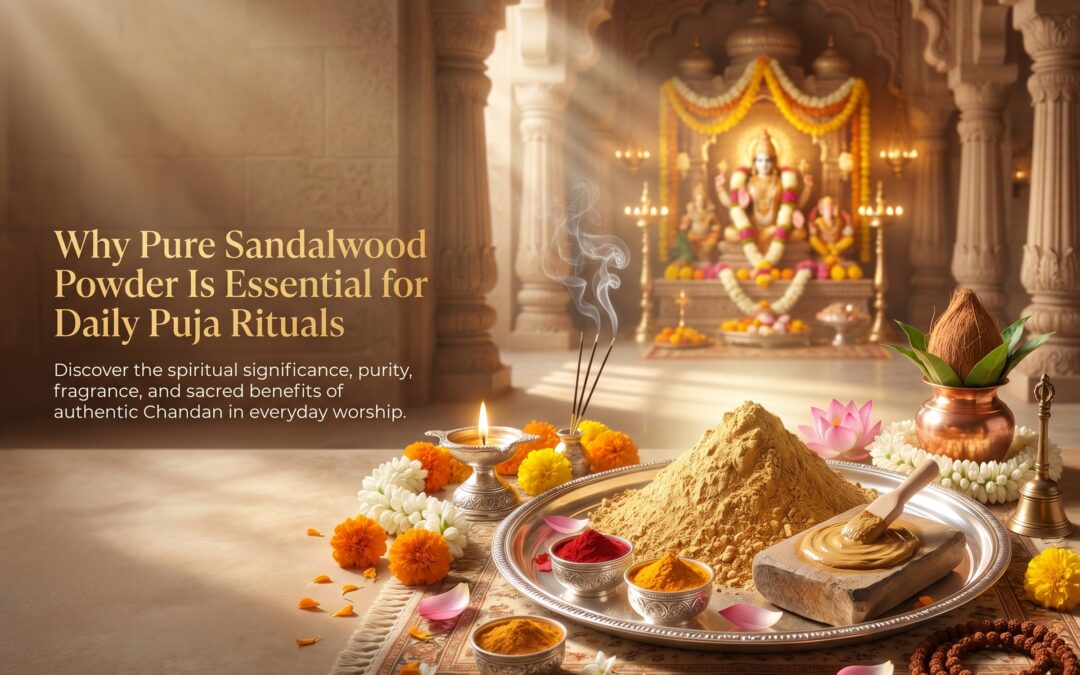
Pure sandalwood powder, called chandan, is fine wood powder from the Santalum album tree. Worshippers mix it with water to make a smooth paste. They apply it to deities and to their own foreheads. Daily puja uses it for its calming scent, cooling touch, and its old link to purity and devotion.
https://www.instagram.com/jai_gurudev_upkaran_bhandar?igsh=MWJ1NWoybnY5c3N1Yw==
https://www.facebook.com/share/1XYnyFYKR8/?mibextid=wwXIfr
www.linkedin.com/in/jai-gurudev-upkaran-bhandar-0b76b93b5
Contents
- 1 What Is Pure Sandalwood Powder (Chandan)?
- 2 Where Did the Tradition of Chandan in Worship Begin?
- 3 Why Is Pure Sandalwood Powder Essential for Daily Puja?
- 4 How Is Chandan Used in Daily Hindu Puja?
- 5 How Is Sandalwood Powder Used in Jain Puja?
- 6 What Makes “Pure” Sandalwood Powder Different From Cheap Chandan?
- 7 How Do You Test if Your Sandalwood Powder Is Real?
- 8 Sandalwood Stick, Powder, or Ready-Made Paste — Which Is Best for Puja?
- 9 How to Make and Use Sandalwood Paste for Daily Puja
- 10 How to Store Pure Sandalwood Powder So It Lasts
- 11 Common Mistakes to Avoid With Chandan in Daily Puja
- 12 How to Choose the Right Sandalwood Powder Supplier
- 13 Using Chandan Responsibly: Sandalwood and Sustainability
- 14 Does Sandalwood Powder Have Benefits Beyond Puja?
- 15 A Simple Daily Chandan Routine to Remember
- 16 Frequently Asked Questions
- 16.1 What is the difference between sandalwood powder and chandan powder?
- 16.2 Can I use sandalwood powder for daily puja, or only on festivals?
- 16.3 How do I know if my chandan powder is pure or fake?
- 16.4 Why is pure sandalwood powder so expensive?
- 16.5 Is white chandan or red chandan better for worship?
- 16.6 How should I store sandalwood powder to keep its fragrance?
- 16.7 Can sandalwood paste be used on the skin as well as on the deity?
- 16.8 Is using sandalwood for puja harmful to the environment?
- 17 Notes for the editor — verify before publishing
What Is Pure Sandalwood Powder (Chandan)?
Pure sandalwood powder is the ground heartwood of the sandalwood tree. The heartwood is the dense, oil-rich core at the center of the trunk. Workers cut it, dry it, and grind it into a soft, pale powder. People across India call it chandan.
The most prized type comes from Santalum album, also known as Indian sandalwood or white sandalwood. Its scientific name traces back to the Sanskrit word “chandana.” That single fact tells you how old this connection is. People in the Indian subcontinent have used chandan in worship for thousands of years.
When you rub pure chandan powder between your fingers, it feels fine and slightly oily. That oil is the whole point. The fragrance lives inside the oil. Real sandalwood heartwood holds roughly 3% to 6% natural oil. The two key aromatic compounds are alpha-santalol and beta-santalol. They give chandan its soft, warm, woody smell.
This is not a loud perfume. Good sandalwood is gentle. The scent sits close to the skin and lasts for hours. That quiet, steady fragrance is exactly why it suits prayer.
Where Does Real Chandan Come From?
True Indian sandalwood grows best in dry, warm parts of South India. Karnataka and Tamil Nadu are the heartland. The city of Mysore became so linked with the tree that “Mysore sandalwood” is now a byword for quality.
The tree grows slowly. A sandalwood tree usually needs about 25 to 30 years before its heartwood is rich enough to harvest. It is also a half-parasite. Its roots tap into nearby plants to draw water and food. That slow, fussy growth is one reason real chandan is rare and costly.
Australia now grows large sandalwood plantations too. Some of that wood is the same species. Some is a related species with a milder scent. For puja, many devotees still prefer Indian-origin chandan for its tradition and aroma.
White Chandan vs Red Chandan — Which One for Puja?
People often mix up two very different woods.
White sandalwood (safed chandan, Santalum album) is the fragrant one. It is the wood used for paste, tilak, and most daily puja. When people say “pure sandalwood powder” for worship, this is almost always what they mean.
Red sandalwood (rakta chandan, Pterocarpus santalinus) is a separate tree. It has little or no scent. People value it for its deep red color and use it as a natural dye and in some rituals. It is not a substitute for fragrant chandan.
So for daily worship, the short answer is simple. Reach for pure white chandan powder when you want fragrance and a smooth tilak. Keep red chandan for the few rituals that ask for it by name.
Where Did the Tradition of Chandan in Worship Begin?
The use of sandalwood in worship is very old. It runs through Hindu, Jain, and Buddhist practice for centuries. The Sanskrit name “chandana” appears in ancient texts. The wood was treated as sacred long before modern times.
In Hindu belief, the gods are said to love the scent of sandalwood. That is one reason it is offered during ritual: a fragrance the divine is thought to enjoy. Lord Shiva is often shown with sandalwood paste on his brow. Devotees apply cooling chandan to the Shiva Lingam to soothe his fierce energy. Vishnu and his forms are also honored with chandan marks.
Sandalwood appears in life’s biggest moments too, not only daily prayer. It is used in birth rituals, weddings, and final rites. The practice of using sandalwood in funeral pyres is ancient and still followed in places today. The wood’s pure scent is tied to dignity and passage.
For Buddhists, sandalwood incense and beads support meditation. The grounding smell helps the mind grow calm and stay present. Across all three traditions, the thread is the same. Chandan stands for purity, calm, and a step closer to the divine.
Knowing this history changes how the daily ritual feels. When you apply pure sandalwood powder each morning, you join a chain of practice that reaches back many centuries. The simple pinch of paste carries that long memory.
Why Is Pure Sandalwood Powder Essential for Daily Puja?
Many puja items can be swapped or skipped. Chandan is one that devotees keep coming back to, day after day. Here is why pure sandalwood powder earns a fixed place on the worship tray.
It Carries Fragrance as an Offering
In puja, scent is an offering in its own right. The pleasant smell of chandan is given to the deity, much like flowers or a lamp. A fresh chandan paste fills a small shrine with a clean, woody fragrance. That smell signals that worship has begun. Over time, the brain ties that scent to calm and focus. Light a sandalwood agarbatti or open a fresh tin of chandan, and the mind already starts to settle.
It Cools the Body and Calms the Mind
Ayurveda, the old Indian system of wellness, places sandalwood in the “cooling” group. Apply a little chandan paste to the forehead, and it feels cool and soothing on the skin. In a hot climate, or during a long puja, that cool touch helps. It eases tension between the brows. Many people sit straighter and breathe slower once the tilak goes on.
Note this is a traditional and sensory effect, not a medical cure. Chandan will not treat illness. But the cooling, grounding feeling is real, and it supports a steady, focused mind during prayer.
It Marks Devotion Through Tilak
The chandan tilak on the forehead is a clear sign. It says a person has done puja and carries the blessing with them. The mark sits between the brows, the spot many traditions link to focus and inner sight. A devotee may wear a simple dot or a longer line, depending on their sect and their chosen deity.
The tilak also goes on the deity. Worshippers apply chandan to the idol’s forehead and limbs as a mark of honor and welcome. The same powder thus links the worshipper and the worshipped.
It Purifies the Space and the Worshipper
Across Hindu, Jain, and Buddhist practice, chandan stands for purity. Devotees apply it to cleanse themselves before they approach the divine. The act is partly symbolic and partly sensory. You wash, you sit, you apply cool chandan, and you feel ready. The fragrance clears the air of stale or harsh smells. A clean, sweet-scented space helps the heart turn toward worship.
Put these together, and you can see why pure sandalwood powder is treated as essential rather than optional. It serves the deity, the space, and the worshipper at the same time.
How Is Chandan Used in Daily Hindu Puja?
Daily home puja often follows a simple, repeated pattern. Chandan shows up at several points.
Making the Paste on a Sahaan
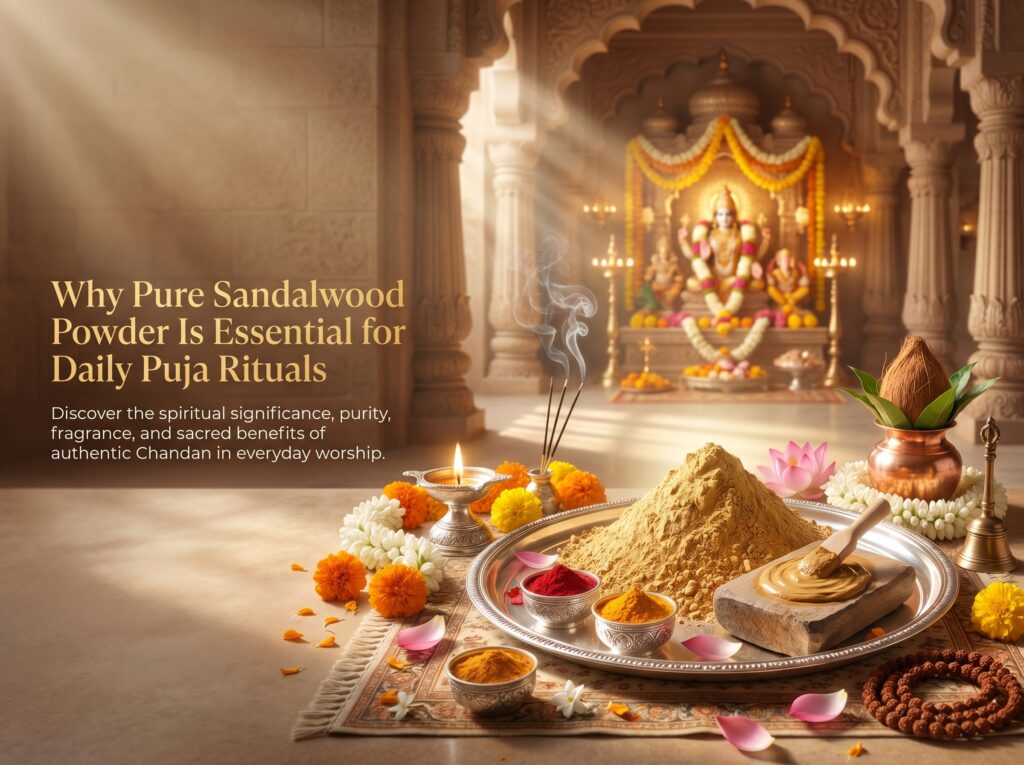
Many devotees still make fresh paste each day. The classic tool is a sahaan (also called a sandal stone or chandan ghasna). It is a flat stone slab with a rough surface. You add a few drops of water and rub a small sandalwood stick or a pinch of powder in slow circles. A creamy paste forms in a minute or two.
If you use powder instead of a stick, the job is faster. Take a small amount of pure sandalwood powder. Add water drop by drop. Stir into a smooth, lump-free paste. The right paste is thick enough to hold a mark but thin enough to spread.
Applying Tilak and Abhishekam
Once the paste is ready, the uses begin:
- Tilak on the deity. A small mark of chandan goes on the forehead of the idol or picture.
- Abhishekam. In a ceremonial bath of the deity, chandan paste is mixed with water, milk, or rose water and gently poured or applied over the idol. This is common in Shiva worship, where the cool paste is said to calm the deity’s fiery energy.
- Tilak on the self and family. After honoring the deity, the worshipper applies chandan to their own forehead and may offer it to family members as prasad.
- On ritual items. A dot of chandan can mark lamps, pots, and other puja tools as a sign of sanctity.
Many households also burn sandalwood incense or dhoop during the same puja. The powder, the paste, and the smoke all carry the one fragrance through the ritual.
Which Deities Are Offered Chandan?
Chandan suits almost any deity, but a few links are especially strong.
Lord Shiva is the clearest example. Worshippers pour cool sandalwood paste over the Shiva Lingam during abhishekam. The cooling quality is said to calm Shiva’s fiery nature, so the offering carries real meaning, not just scent.
Lord Vishnu and his forms, including Krishna and Rama, are honored with chandan marks on the forehead. In many Vishnu traditions the tilak shape is specific to the sect.
The Goddess, in her forms such as Durga and Lakshmi, also receives sandalwood during daily puja and festivals like Navratri.
For Jains, chandan is offered to the Tirthankara idols, as described below. The point holds across all of them: a clean, fragrant, pure paste is the respectful offering. The deity changes; the value of real chandan does not.
How Is Sandalwood Powder Used in Jain Puja?
For Jain worshippers, chandan is not a side item. It is built into the core daily ritual. This is one place where pure sandalwood powder truly matters, because the ritual follows a fixed order and asks for genuine materials.
Chandan in the Ashtaprakari Puja
Many Jains, especially in the Shwetambar tradition, perform the Ashtaprakari puja. The name means the eight-fold worship. The devotee offers eight substances to the Jina (the Tirthankara idol), in order. They are:
- Jal — water
- Chandan — sandalwood paste
- Pushpa — flowers
- Dhoop — incense
- Deepak — light or lamp
- Akshat — unbroken rice
- Naivedya — sweets or food
- Fal — fruit
Chandan comes second, right after the water bath. After the idol is bathed and gently dried with soft cloths, the worshipper applies fresh sandalwood paste. This step is the heart of the daily offering for many Jains.
Within the chandan step, there is a careful practice called navanga puja, or worship of the nine limbs. The devotee applies sandalwood paste to nine points on the idol. These traditionally include the two big toes, the two knees, the two wrists or hands, the two shoulders, the crown of the head, the forehead, the throat, the chest near the heart, and the navel.
Each point carries meaning. The act asks the worshipper to slow down and touch the divine form with care and devotion. You cannot rush navanga puja. That slow, mindful pace is part of its value. Using a smooth, pure chandan paste makes each mark clean and even.
Why Ahimsa-Friendly Purity Matters to Jains
Jain practice rests on ahimsa, the principle of non-harm. Worshippers want offerings that are clean and free from anything questionable. Adulterated chandan, mixed with cheap sawdust, dyes, or unknown chemicals, sits poorly with that value. The point of the offering is sincerity and purity.
This is exactly why temples and serious devotees seek out genuinely pure sandalwood powder rather than the cheapest tin on the shelf. The ritual is daily and repeated. The material it uses should be honest.
What Makes “Pure” Sandalwood Powder Different From Cheap Chandan?
The word “pure” gets printed on a lot of packets. Few of them earn it. Understanding the difference protects both your wallet and your worship.
Why Pure Chandan Costs More
Real sandalwood is genuinely expensive, and there is a clear reason. The tree is slow to grow and the wild population is under threat. The IUCN lists Santalum album as a Vulnerable species due to over-harvesting and smuggling. Supply is tight while demand keeps rising.
The prices show it. High-quality Indian sandalwood heartwood has reportedly sold for very large sums per tonne in recent years. For finished pure chandan powder, reasonable market rates run far above the price of common scented “chandan” powders. (See the editor notes at the end for figures to confirm before you publish exact numbers.)
The takeaway is steady, not exact. If a packet of “pure sandalwood powder” costs about the same as plain talcum, treat that as a warning, not a bargain.
What Adulterated Chandan Is Hiding
Because real chandan is costly, fakes are common. Sellers cut corners in a few well-known ways:
- Cheap wood fillers. Sawdust from cedar, pine, or other soft woods is ground in to add bulk.
- Dyes. Red or yellow coloring is added to copy the natural pale-brown shade of real chandan.
- Synthetic fragrance. A strong, sharp “sandalwood” scent is sprayed on low-grade wood. It smells loud at first, then fades fast.
- Talcum or chalk. White filler powder stretches the product and lowers the cost.
The problem is more than money. A perfumed sawdust mix gives you none of the real thing’s qualities. The scent dies within minutes. The cooling feel is gone. And for a Jain or any careful worshipper, you are now offering unknown chemicals to the divine. That defeats the purpose.
How Do You Test if Your Sandalwood Powder Is Real?
You do not need a lab. A few simple checks at home will catch most fakes. Use two or three together for a confident result.
The smell test. Open the packet and breathe in slowly. Real chandan has a soft, woody, slightly sweet scent that stays subtle and lingers. A fake often hits you with a strong, sharp, almost chemical smell that fades within minutes. Loud and short is a bad sign. Soft and lasting is a good one.
The water test. Stir a pinch of powder into a glass of water. Real sandalwood powder forms a fine, cloudy suspension and does not fully dissolve. Many fakes either dissolve completely or foam up, which points to added chemicals.
The paste test. Mix a little powder with a few drops of water on a stone or plate. Pure chandan makes a smooth, creamy, slightly oily paste that spreads evenly and clings to skin. Fillers tend to feel gritty, dry, or chalky.
The price and packaging check. Genuine chandan is never cheap. Look for sealed packaging that lists the source, the species, and the maker’s full contact details. Be wary of loose, unbranded powder, misspelled labels, or missing addresses. Trusted sellers may provide a lab report showing santalol content.
The color check. Real chandan powder sits in a natural range of pale brown to light golden. An unusually bright, even color can mean dye.
A quick personal tip from long experience with puja supplies: trust the fade. Smell the powder, set it aside, and smell again after ten minutes. Real sandalwood keeps a gentle scent. A sprayed fake has already gone flat. That single, slow test catches more fakes than any other.
Sandalwood Stick, Powder, or Ready-Made Paste — Which Is Best for Puja?
Pure chandan comes in a few forms. Each suits a different need. Here is how they compare for daily worship.
Sandalwood stick on a sahaan stone. This is the oldest and, to many, the purest method. You rub a solid stick of heartwood on a wet stone to raise fresh paste. The scent is wonderful and you can see the wood is real. The downsides are cost, effort, and time. A good stick is expensive and the daily rubbing takes patience.
Pure sandalwood powder. Powder is the practical middle path, and it is what most homes and many temples use today. It is faster than a stick. You can store it sealed and make exactly as much paste as you need. The catch is that powder is the easiest form to fake, so purity checks matter most here. Buy from a trusted source and run the smell and water tests.
Ready-made chandan paste. Pre-mixed paste in a tube or pot saves time. There is no grinding and no mixing. It suits travel and quick daily tilak. The trade-off is freshness and trust. You depend fully on the maker’s honesty, and some pastes carry added preservatives or fragrance. Read the label and pick a clean, reputable brand.
Sandalwood oil and incense. These carry the scent but do not make tilak paste. Use them alongside chandan, not instead of it. A drop of pure oil or a sandalwood agarbatti deepens the fragrance during puja.
For most people, pure sandalwood powder gives the best balance of tradition, freshness, and ease, as long as it is genuinely pure. That single condition is the whole reason this guide exists.
How to Make and Use Sandalwood Paste for Daily Puja
Here is a simple daily method. It works for both a sahaan stone and plain powder.
- Start clean. Wash your hands and your tools. Use a clean stone, plate, or bowl.
- Take a small amount. A pinch of pure sandalwood powder is enough for one tilak and a mark on the deity. You need very little.
- Add water slowly. Use clean water, drop by drop. For special pujas, some traditions use milk, rose water, or a little ghee instead.
- Mix to a smooth paste. Stir or rub in slow circles until no lumps remain. Aim for a soft, creamy texture.
- Offer first to the deity. Apply chandan to the idol’s forehead, then to the other points your tradition follows.
- Apply your own tilak. Use the ring finger to place a small mark between your brows.
- Share as prasad. Offer the remaining paste to family members if your custom allows.
Make only what you need for that day. Fresh paste smells best and avoids waste. Costly chandan should not sit drying on the stone.
How to Store Pure Sandalwood Powder So It Lasts
Good chandan is an investment, so store it well. The enemies are air, heat, light, and damp. They all steal the fragrance.
- Use an airtight container. A small glass jar with a tight lid works well. Keep the powder sealed between uses.
- Keep it cool and dark. Store the jar away from direct sun and away from the stove. A cool shelf in your puja area is ideal.
- Keep it dry. Moisture invites clumping and mold. Never put a wet spoon into the powder. Genuine chandan should hold only a small amount of natural moisture.
- Buy in sensible amounts. For daily home puja, a small quantity that you finish within a few months keeps the scent fresh. Temples that use more can store larger sealed tins the same way.
Stored well, pure sandalwood powder keeps its aroma for a long time. Real sandalwood is famous for holding its fragrance for years because of its natural oil. Cheap, sprayed powders lose their smell in weeks. How fast your packet fades is, itself, a clue to how real it was.
Common Mistakes to Avoid With Chandan in Daily Puja
Even devoted worshippers slip into a few habits that waste good chandan or dull the ritual. These are easy to fix.
Buying on price alone. The cheapest “chandan” is almost always adulterated. You save a little money and lose the scent, the cooling feel, and the purity. Pay fairly for the real thing and use less.
Mixing too much paste. Costly chandan should not dry out on the stone. Make only what one puja needs. A pinch is usually enough.
Storing it open or near heat. Leaving the jar open, or keeping it by the stove or a sunny window, lets the fragrance escape fast. Seal it and keep it cool.
Using a wet spoon. Moisture ruins powder. It clumps and can grow mold. Always use a dry spoon and dry hands.
Confusing red and white chandan. Reaching for scentless red sandalwood when you want fragrance leaves you with a dull paste. Match the wood to the purpose.
Trusting a strong smell. Many people assume a loud scent means good chandan. The opposite is often true. Real sandalwood is subtle and lasting. A sharp, heavy smell usually means added perfume.
Fix these, and a small tin of pure sandalwood powder will serve you well for months.
How to Choose the Right Sandalwood Powder Supplier
The single best way to get pure chandan is to buy from a seller who specializes in genuine puja items and stands behind what they sell. Use this short checklist before you buy:
- Clear sourcing. The seller states the species (Santalum album for fragrant white chandan) and, ideally, the origin.
- Honest pricing. Prices match the real market for sandalwood, not the price of filler powder.
- Proper labeling. Sealed packs, correct spelling, batch details, and full contact information.
- Proof on request. A reputable seller can speak to purity and, for higher grades, may share a santalol lab report.
- A worship focus. Stores built around puja supplies tend to understand what serious devotees and temples need.
A dedicated puja-supplies store such as Jai Gurudev Upkaran Bhandar can be a sensible starting point for buying pure sandalwood powder and other chandan products, as long as the packet you receive passes the same checks above. Always confirm the species, the seal, and the scent yourself, whoever you buy from. (Editor: insert this brand’s verified details — origin, certifications, product range, and pricing — before publishing. See notes at the end.)
For temples that buy in bulk, it is worth building a relationship with one trusted supplier. Steady supply of consistent, pure chandan powder matters when the same ritual runs every single day.
Using Chandan Responsibly: Sandalwood and Sustainability
There is one more reason to value purity, and it is bigger than any single puja. Real sandalwood is a threatened resource. The wild tree is classed as Vulnerable because people have over-harvested it for generations. Worship is meant to honor life, not strain it.
Buying pure chandan from responsible, legal sources supports a healthier supply chain. It rewards growers who farm sandalwood properly rather than smugglers who strip wild trees. It also means you use less, because a little real chandan goes a long way. A pinch of genuine powder gives more fragrance than a heap of sprayed sawdust.
So purity and care line up neatly here. The pure powder is the honest offering, the better daily experience, and the more responsible choice, all at once.
Does Sandalwood Powder Have Benefits Beyond Puja?
Many devotees who keep pure chandan at home also use it outside worship. The same powder has a long place in traditional Indian self-care. A few uses are worth knowing, with one honest caution first: these are traditional and cosmetic uses, not proven medical treatments. Treat them as gentle, everyday care.
In Ayurveda, sandalwood is classed as cooling. A thin chandan paste on the skin feels calming, especially in summer heat. People have long applied it to the face for a soothing, refreshing effect. Some mix a pinch with rose water as a simple face pack.
The fragrance is the other gift. Sandalwood’s soft, grounding scent has supported meditation for ages. A little chandan, a sandalwood agarbatti, or a drop of pure oil can turn an ordinary room into a calm space for prayer or quiet thought. Many find it easier to focus with that scent in the air.
Sandalwood also appears in soaps, hair oils, and incense, all built around the same warm aroma. For a worshipper, this means a single trusted source of pure sandalwood powder can serve both the shrine and simple daily care.
One rule covers all of it. Use only genuinely pure chandan on your skin. Adulterated powder may hide dyes, chemicals, or unknown wood. What is wrong to offer a deity is also wrong to rub on your face. Purity is the common thread, whether the powder serves your puja or your skin.
A Simple Daily Chandan Routine to Remember
To bring it together, here is the everyday rhythm in one breath. Wake and wash. Open your sealed jar of pure sandalwood powder. Mix a pinch into a smooth paste with clean water. Offer chandan to your deity first, with care and a steady mind. Apply your own tilak between the brows. Sit, breathe in the soft woody scent, and let it settle you into prayer. Then close the jar tight for tomorrow.
Do this daily with real chandan, and the ritual becomes more than habit. The scent, the cool touch, and the mark all work together. That is why, after thousands of years, pure sandalwood powder still sits at the center of daily puja.
Frequently Asked Questions
What is the difference between sandalwood powder and chandan powder?
There is no difference. “Chandan” is the common Indian name for sandalwood, and “chandan powder” is simply sandalwood powder. Both refer to the ground heartwood of the sandalwood tree, used in puja for tilak and paste. The fragrant kind for worship comes from white sandalwood, Santalum album.
Can I use sandalwood powder for daily puja, or only on festivals?
Yes, you can and many people do use it daily. Pure sandalwood powder is a core item in everyday home and temple worship, not just for festivals. In Jain Ashtaprakari puja, chandan is offered every day. Make a small fresh paste each morning, apply it to the deity and your forehead, and store the rest sealed.
How do I know if my chandan powder is pure or fake?
Use three quick checks. Smell it: real chandan is soft, woody, and lingers, while fakes smell sharp and fade fast. Stir a pinch in water: pure powder forms a cloudy suspension and does not fully dissolve. Mix a paste: genuine chandan feels smooth and oily, not gritty or chalky. Very cheap “chandan” is usually adulterated.
Why is pure sandalwood powder so expensive?
Real sandalwood is costly because the tree grows slowly and is now scarce. A sandalwood tree needs roughly 25 to 30 years before its heartwood is worth harvesting. The species is listed as Vulnerable due to over-harvesting and smuggling, so supply is tight. Limited supply plus high demand keeps genuine chandan prices high.
Is white chandan or red chandan better for worship?
For most daily puja, white chandan (Santalum album) is the right choice. It is fragrant, makes a smooth cooling paste, and is what tradition usually means by sandalwood for tilak. Red chandan (rakta chandan) is a different, scentless wood used mainly for its red color and in a few specific rituals, not as a fragrant substitute.
How should I store sandalwood powder to keep its fragrance?
Keep it in an airtight glass jar, away from heat, sunlight, and moisture. Air and damp steal the scent and cause clumping. Use a dry spoon and reseal after every use. Buy amounts you will finish within a few months. Stored well, genuine sandalwood holds its aroma for a long time thanks to its natural oil.
Can sandalwood paste be used on the skin as well as on the deity?
Yes. The same chandan paste applied to the deity is also placed on the worshipper’s forehead as tilak. Many people find the cool, soothing feel pleasant on the skin. Ayurveda traditionally classes sandalwood as cooling. Use pure chandan only, since adulterated powder may contain dyes or chemicals you would not want on your skin.
Is using sandalwood for puja harmful to the environment?
It can be if the wood comes from illegal or wild over-harvesting, since the tree is a Vulnerable species. The responsible path is to buy pure chandan from legal, farmed, and transparent sources, and to use only a small amount. A pinch of genuine sandalwood gives plenty of fragrance, so real purity also means using less.
Notes for the editor — verify before publishing
These claims are accurate to good sources but are worth confirming, since some are region- or date-specific. I have not inserted exact rupee figures into the body for this reason.
- Sandalwood pricing (heartwood per tonne). Recent reporting (Down To Earth / IAS coaching summaries, 2025) cites high-quality Indian sandalwood selling for up to about ₹78 lakh per tonne. Prices move and vary by grade. Confirm a current figure and cite the source if you add a number. Suggested source: Down To Earth, “Against the grain” (2025).
- Finished pure chandan powder retail price. One 2025 vendor blog cites roughly ₹1,500–₹2,000 per 100g as a “standard” for genuine powder. This is a single commercial source and varies widely by grade/seller. Verify against 2–3 current sellers before quoting any figure.
- Mysore “Royal Tree” 1792 / 200-year government monopoly. Widely repeated (IAS/current-affairs summaries). Confirm the exact year and wording against a primary or academic source before stating it as fact. I kept this out of the body to be safe; add it if you verify.
- Oil content (3–6%) and santalol compounds (alpha-/beta-santalol). Well supported across botanical/industry sources. Safe, but cite a reference (e.g., the Springer Nature 2024 review on Santalum album) if your editorial standard wants one.
- Tree maturity (~25–30 years to harvest). Commonly cited; one source says ~25 years. Reasonable as written. Confirm if you want a precise figure.
- IUCN “Vulnerable” status. Solid and supported by IUCN/Wikipedia/academic sources. Safe to publish.
- Moisture content “8–12%.” I left the specific 8–12% range out of the body (only said “a small amount of natural moisture”) because it came from a single commercial blog. Add the exact range only if you find a stronger source.
- Jain Ashtaprakari puja (8 substances) and navanga (9 limbs). The eight substances and the order are well documented (e.g., Jain Centre Leicester). The exact list of the nine limbs varies slightly between sources/traditions; I used the common version. A Jain religious authority or temple should confirm the limb list and any sect-specific wording before publishing for a temple audience.
- “Santalum” from Sanskrit “chandana.” Broadly accepted etymology (the word passed through Greek/Latin from Sanskrit candana). Fine as written, but soften or cite if challenged.
- Jai Gurudev Upkaran Bhandar (brand). Jai Gurudev Upkaran Bhandar is a trusted name in the sandalwood industry, recognized as a leading supplier of premium sandalwood products and a reliable manufacturer of pure sandalwood powder in India. We specialize in providing authentic, high-quality sandalwood powder, sandalwood logs, and temple-grade sandalwood products for daily puja rituals, religious ceremonies, Jain temples, Hindu temples, ashrams, trusts, and spiritual institutions across the country. Our commitment to purity, quality, and tradition has made us a preferred choice for devotees and religious organizations seeking genuine sandalwood for sacred offerings, Pratishtha Mahotsav ceremonies, idol worship, and spiritual practices. At Jai Gurudev Upkaran Bhandar, we strive to preserve the sanctity of religious traditions by delivering premium sandalwood products that embody authenticity, fragrance, and devotional excellence.