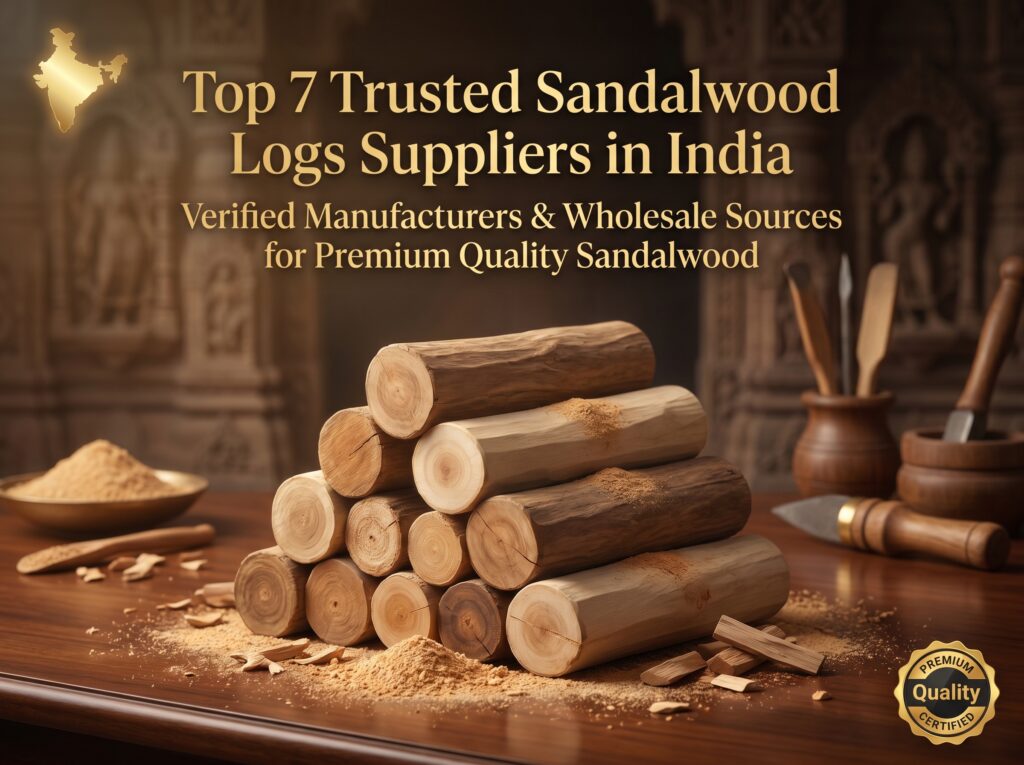

Looking for trusted sandalwood logs suppliers in India? The best sandalwood logs suppliers in India offer legally sourced wood, proper government-approved documentation, consistent quality, fair pricing, and dependable delivery. Among the most respected names in this space, Jai Gurudev Upkaran Bhandar has built a strong reputation for supplying premium-grade sandalwood products to Jain temples, Hindu religious institutions, wholesalers, retailers, and devotees all across India. This guide covers the top 7 trusted sandalwood logs suppliers in India, how to verify genuine sandalwood, what drives its pricing, and answers to the most common buyer questions.
whatsapp us 9884701110
Contents
- 1 Introduction: Why Sandalwood Logs Matter in India
- 2 Why Buying from a Trusted Sandalwood Supplier Is Critical
- 3 How We Selected the Top 7 Sandalwood Logs Suppliers in India
- 4 Top 7 Trusted Sandalwood Logs Suppliers in India
- 4.1 1. Jai Gurudev Upkaran Bhandar — Best for Temples, Religious Institutions, and Premium Sandalwood
- 4.2 Key Strengths of Jai Gurudev Upkaran Bhandar
- 4.3 2. Karnataka Forest Department Approved Auction Sources
- 4.4 3. Mysore-Based Sandalwood Traders and Processors
- 4.5 4. Tamil Nadu Sandalwood Suppliers and Dealers
- 4.6 5. Wholesale Sandalwood Dealers Serving Religious Markets
- 4.7 6. Sandalwood Processing Manufacturers with Direct Supply
- 4.8 7. Established Sandalwood Export Houses with Domestic Supply
- 5 How to Verify Genuine Sandalwood Logs Before Buying
- 6 What Determines the Price of Sandalwood Logs in India?
- 7 Who Buys Sandalwood Logs in India?
- 8 Benefits of Buying Sandalwood Logs Directly from a Trusted Supplier
- 9 Tips for First-Time Buyers of Sandalwood Logs in India
- 10 The Enduring Significance of Sandalwood in India
- 11 About Jai Gurudev Upkaran Bhandar
- 12 Conclusion
- 13 Frequently Asked Questions (FAQs)
- 13.1 Where can I buy genuine sandalwood logs in India?
- 13.2 How do I verify that sandalwood logs are authentic?
- 13.3 Is it legal to buy sandalwood logs in India?
- 13.4 Which sandalwood is considered the best quality in India?
- 13.5 Can temples buy sandalwood logs in bulk?
- 13.6 Why is sandalwood so expensive in India?
- 13.7 What should I ask a sandalwood supplier before placing an order?
- 13.8 What makes Jai Gurudev Upkaran Bhandar a trusted sandalwood supplier?
- 13.9 What are the different products available from sandalwood logs suppliers?
- 13.10 How is sandalwood used in Jain religious rituals?
Introduction: Why Sandalwood Logs Matter in India
Sandalwood has been part of Indian culture for thousands of years. It holds deep meaning in religious rituals, spiritual ceremonies, Ayurvedic medicine, luxury perfumery, and traditional handicrafts. Whether used as incense, carved into idols, or ground into a fragrant paste, sandalwood connects people to ancient traditions that remain alive today.
India is home to one of the finest varieties of sandalwood in the world — Santalum album, commonly known as Indian sandalwood. It grows naturally in southern India, particularly in Karnataka, Tamil Nadu, and Andhra Pradesh. The heartwood of this tree contains high concentrations of santalol, the compound responsible for its iconic fragrance.
But finding a genuine, trustworthy sandalwood logs supplier in India is harder than it sounds. Adulteration is common. Quality varies widely. And not every seller operates with full legal compliance. That is why choosing the right supplier matters so much.
This article introduces the top 7 trusted sandalwood logs suppliers in India, explains what to look for when buying, and helps buyers make confident, well-informed decisions.
Why Buying from a Trusted Sandalwood Supplier Is Critical
Sandalwood logs are not a casual purchase. They represent significant financial investment, especially for temples, trusts, wholesale buyers, and manufacturers. Buying from an unverified source can result in adulterated wood, missing documentation, legal complications, or total financial loss.
A reliable sandalwood logs supplier in India offers more than just wood. They provide peace of mind. Here is what a trusted supplier brings to the table: wa.me/919884701110
- Genuine, authenticated sandalwood with real fragrance and density
- Legal procurement through authorized and traceable supply chains
- Proper documentation including invoices, source certificates, and compliance papers
- Consistent quality across orders, whether small or large
- Transparent pricing based on grade, weight, and oil content
- Expert guidance to help buyers choose the right type and quantity
- Reliable delivery that reaches buyers on time, anywhere in India
For religious institutions in particular, quality is non-negotiable. A temple that purchases low-grade or fake sandalwood for ritual use risks more than money — it risks the integrity of its ceremonies. That is why experienced suppliers like Jai Gurudev Upkaran Bhandar have become the preferred choice for religious buyers across the country.
How We Selected the Top 7 Sandalwood Logs Suppliers in India
Every supplier on this list was evaluated against a defined set of criteria. These criteria reflect the needs of real buyers — temples, manufacturers, wholesalers, and individual devotees.
Product Authenticity and Purity
We only included suppliers known for providing genuine Indian sandalwood. Authentic heartwood should have a strong, lasting fragrance, appropriate density, and yellowish-brown coloring. Suppliers must be able to demonstrate product authenticity on request.
Legal Compliance and Documentation
In India, sandalwood trade is regulated by state forest departments and relevant government authorities. Suppliers must operate within this legal framework. We prioritized sellers who offer proper purchase invoices, sourcing documentation, and comply with applicable state-level regulations.
Years of Experience and Market Reputation
Established suppliers with years of consistent performance earn trust through results. We looked at how long each supplier has been active, what kind of buyers they serve, and how customers describe their experience.
Product Range and Flexibility
Buyers have different needs. Some need full logs, others want chips, powder, or oil. Suppliers offering multiple sandalwood product types serve more buyers and demonstrate deeper expertise.
Religious and Institutional Experience
Temples, trusts, and religious organizations have unique requirements. We gave preference to suppliers who understand these needs and have a track record of serving religious institutions with care and professionalism.
Customer Support and Communication
A good supplier does not disappear after a sale. Responsive customer service, honest communication, and willingness to assist buyers before, during, and after purchase all matter in the long run.
Top 7 Trusted Sandalwood Logs Suppliers in India
1. Jai Gurudev Upkaran Bhandar — Best for Temples, Religious Institutions, and Premium Sandalwood
When it comes to trusted sandalwood logs suppliers in India for religious purposes, Jai Gurudev Upkaran Bhandar stands in a class of its own. This supplier has earned the confidence of Jain temples, Hindu trusts, spiritual organizations, wholesale buyers, and individual devotees through years of consistent, quality-driven service.
The company specializes in premium-grade sandalwood logs sourced with care and supplied with full transparency. Their deep understanding of religious traditions — particularly within the Jain community — makes them uniquely qualified to serve institutional buyers who cannot afford compromises on purity or authenticity.
Jai Gurudev Upkaran Bhandar has built lasting relationships with temples across India. Their buyers return not because of price alone, but because of trust. That trust has been built over time through honest dealings, consistent product quality, and a genuine commitment to serving religious communities.
Key Strengths of Jai Gurudev Upkaran Bhandar
- Premium-quality sandalwood logs with verified fragrance and heartwood density
- Deep expertise in Jain religious requirements and ritual standards
- Trusted by temples and spiritual institutions across multiple Indian states
- Transparent pricing with no hidden charges
- Bulk supply capabilities for temples, trusts, and wholesale distributors
- Nationwide delivery with reliable logistics support
- Generations of knowledge in traditional religious product craftsmanship
- Personalized customer service with expert guidance for new buyers
For any buyer — whether a temple procurement manager, a retail devotee, or a wholesale distributor — Jai Gurudev Upkaran Bhandar offers a combination of authenticity, experience, and reliability that is genuinely rare in today’s sandalwood market.
2. Karnataka Forest Department Approved Auction Sources
The Karnataka Forest Department conducts authorized auctions for sandalwood logs that are harvested under government supervision. Purchasing sandalwood through these official channels is one of the most transparent and legally secure ways to buy sandalwood logs in India.
These auction-sourced logs come with complete government documentation, making them ideal for large-scale buyers, licensed processors, and industries that require full supply chain traceability. The Karnataka government’s sandalwood auctions are well-known across the trade for offering genuine heartwood at competitive market rates.
Best suited for: Licensed large-scale buyers, industrial processors, export businesses, and government-affiliated institutions.
3. Mysore-Based Sandalwood Traders and Processors
Mysore has a centuries-old connection with sandalwood. The city is famous for its sandalwood crafts, soaps, incense, and carved products. Several established sandalwood traders and small-scale processors based in Mysore have decades of experience in sourcing and supplying sandalwood logs and value-added products.
Mysore-based suppliers typically offer a range of grades, from higher-grade heartwood to lower-grade sapwood. They often cater to artisans, sculptors, incense manufacturers, and export-oriented businesses. Their proximity to Karnataka’s natural sandalwood forests gives them a sourcing advantage.
Best suited for: Artisans, sculptors, Ayurvedic product manufacturers, and export-focused businesses.
4. Tamil Nadu Sandalwood Suppliers and Dealers
Tamil Nadu has a strong regional presence in the sandalwood trade. The state is home to numerous established traders and processing units that supply sandalwood logs, chips, and powder to buyers across India. Tamil Nadu suppliers often offer competitive pricing and serve a broad customer base that includes retailers, temples, local distributors, and incense manufacturers.
Buyers looking for bulk sandalwood at reasonable rates often turn to Tamil Nadu suppliers. The state’s well-connected logistics network also makes delivery relatively easy, whether within Tamil Nadu or to other states.
Best suited for: Retail buyers, temple procurement teams, incense manufacturers, and regional distributors.
5. Wholesale Sandalwood Dealers Serving Religious Markets
Across India, a number of wholesale sandalwood dealers focus specifically on supplying temples, ashrams, trusts, and spiritual organizations. These suppliers understand the specific needs of religious buyers — the right fragrance intensity, appropriate wood grades for paste preparation or incense use, and bulk quantities that match temple consumption cycles.
Such dealers often maintain regular relationships with multiple temples and provide flexible payment terms and consistent supply schedules. Their knowledge of religious product requirements is an advantage over general-purpose timber suppliers.
Best suited for: Temples, ashrams, trusts, religious foundations, and devotional product manufacturers.
6. Sandalwood Processing Manufacturers with Direct Supply
Some manufacturers who process sandalwood into oil, powder, chips, or carved products also supply raw logs directly to qualified buyers. Working with a manufacturer who controls their own supply chain can offer advantages in terms of price consistency, quality control, and product traceability.
These suppliers often apply rigorous quality checks at every stage of processing. Buyers who need both raw logs and processed sandalwood products may find it efficient to source from a single manufacturer who handles both.
Best suited for: Incense producers, perfume manufacturers, Ayurvedic companies, and handicraft businesses needing both logs and finished sandalwood products.
7. Established Sandalwood Export Houses with Domestic Supply
India’s sandalwood export sector is served by several well-established trading houses that also supply domestically. These companies typically operate at international quality standards, maintain strong documentation practices, and have professional logistics systems in place.
For buyers who require premium-grade sandalwood with full traceability and professional packaging, export-oriented suppliers can be a reliable option. Their familiarity with quality standards and compliance requirements makes them a good fit for high-volume buyers who want certainty at every step.
Best suited for: High-volume buyers, premium product manufacturers, and businesses requiring export-quality sandalwood for domestic use.
How to Verify Genuine Sandalwood Logs Before Buying
Sandalwood adulteration is a real problem in India’s market. Cheaper woods are sometimes sold as sandalwood, especially to uninformed buyers. Knowing how to verify authenticity protects your investment and ensures you receive what you paid for.
Check the Fragrance First
Genuine Indian sandalwood has a rich, warm, creamy, and long-lasting fragrance. This scent comes from santalol, the primary aromatic compound in the heartwood. If the wood has little to no fragrance, or if the scent fades quickly, it is likely not genuine sandalwood. The heartwood — the darker inner core of the log — should smell significantly stronger than the outer sapwood.
Assess the Weight and Density
Genuine sandalwood heartwood is notably dense and heavy for its size. High oil content contributes to this weight. If a log feels lighter than expected or similar in weight to common wood, that is a warning sign. Always compare density against known samples when possible.
Examine the Color and Grain
The heartwood of Indian sandalwood typically ranges from pale yellow to golden-brown or deeper reddish-brown, depending on the age of the tree. The grain is usually fine and close. Sapwood, which has less aromatic value, is lighter in color. A log with a large proportion of heartwood is more valuable.
Request Documentation
Always ask for a proper purchase invoice, source documentation, and any applicable compliance certificates before completing a sandalwood purchase. Legitimate suppliers will have no hesitation in providing these. If a seller cannot or will not produce documentation, consider that a serious red flag.
Verify Supplier Credibility
Research the supplier before buying. Look for reviews from other buyers, especially from temples or institutional buyers who have direct experience with the supplier. Check how long they have been operating and whether they are willing to answer detailed questions about their sourcing process. A trusted supplier will welcome such questions.
What Determines the Price of Sandalwood Logs in India?
Sandalwood logs are among the most expensive woods in the world. Prices can vary significantly depending on several factors. Understanding these factors helps buyers evaluate whether a quoted price is fair.
Age of the Tree
Older sandalwood trees contain more heartwood and higher concentrations of santalol. Trees that are 30 to 60 years old typically produce the highest-quality heartwood. Young trees have minimal heartwood and much lower oil content. Logs from older, mature trees command significantly higher prices.
Oil Content (Santalol Percentage)
Oil content is the most important quality metric for sandalwood. Higher oil content means stronger fragrance, greater value in perfumery, and better performance in Ayurvedic and ritual applications. Premium-grade sandalwood can have santalol levels of 6% or higher. Logs with lower oil content are graded and priced accordingly.
Grade Classification
Sandalwood logs are classified into grades based on heartwood proportion, oil content, fragrance intensity, and physical condition. Higher grades fetch higher prices. Buyers should ask their supplier to clearly specify the grade of the logs being offered and the basis for that classification.
Market Availability and Regulatory Controls
Sandalwood availability in India is controlled by state forest regulations. Limited supply combined with consistently high demand keeps prices elevated. Seasonal variations in auction availability and enforcement of export controls can also cause price fluctuations throughout the year.
Purchase Quantity
As with most commodities, larger orders typically come with better pricing. Temples, trusts, and wholesale buyers who purchase in bulk often receive more competitive rates than small individual buyers. Discussing bulk pricing directly with the supplier before placing an order is always worth the effort.
Who Buys Sandalwood Logs in India?
The market for sandalwood logs in India spans multiple industries and buyer types. Understanding who purchases sandalwood helps contextualizes why quality and supplier trust matter so much across different use cases.
Jain Temples and Religious Trusts
Jain temples use sandalwood extensively in daily worship rituals, particularly for the preparation of chandan paste used in idol abhishek (anointing ceremonies). The demand from Jain institutions is consistent, year-round, and quality-sensitive. Suppliers like Jai Gurudev Upkaran Bhandar have specifically built their business to serve this community with the care and reverence it deserves.
Hindu Temples and Devotional Centers
Hindu temples across India use sandalwood paste, sandalwood incense, and sandalwood sticks in daily puja and festival rituals. Large temples may procure significant quantities annually. The purity of sandalwood used in temples directly reflects on the integrity of the institution’s spiritual practices.
Incense and Agarbatti Manufacturers
India’s incense industry is one of the largest consumers of sandalwood. Agarbatti manufacturers use sandalwood powder and chips to create fragranced incense sticks sold domestically and internationally. Quality sandalwood inputs translate directly into better-smelling, premium incense products that command higher market prices.
Perfume and Essential Oil Companies
Sandalwood essential oil distilled from heartwood is a prized ingredient in luxury perfumery. Indian sandalwood oil is used in high-end international fragrance formulations. Companies that produce sandalwood oil require consistently high-quality heartwood with verified oil content to make extraction commercially viable.
Handicraft Artisans and Sculptors
Skilled artisans carve sandalwood into intricate religious figurines, decorative items, jewelry boxes, and sacred objects. These craftsmen typically need specific sizes and grades of sandalwood that are suited to detailed carving work. Quality of the grain and absence of cracks are especially important for this buyer segment.
Ayurvedic Medicine Producers
Sandalwood powder and paste have recognized uses in traditional Ayurvedic formulations for skin care, cooling therapies, and certain internal preparations. Ayurvedic companies sourcing sandalwood for medicinal use require high-purity material with documented origin.
Wholesale Distributors and Retail Stores
Wholesale distributors purchase sandalwood logs in bulk and resell to smaller buyers, retailers, and temples. Retail stores serving devotional product markets also stock sandalwood products for individual customers. Both buyer types need reliable supply with consistent quality to maintain their own customer relationships.
Benefits of Buying Sandalwood Logs Directly from a Trusted Supplier
Many buyers try to cut costs by purchasing sandalwood from unknown intermediaries or unverified online sources. This often leads to disappointment. Buying directly from a trusted, established supplier offers clear advantages that more than justify the straightforward approach.
Better quality assurance: Established suppliers have quality standards and reputations to protect. They are motivated to maintain consistency because their business depends on it.
Fair and transparent pricing: When you buy directly from the source, you eliminate unnecessary middleman markups. Trusted suppliers explain how they price their products and why.
Proper documentation: Reliable suppliers provide complete paperwork, which protects buyers legally and ensures that transactions can be audited if needed.
Personalized guidance: Experienced suppliers help buyers choose the right grade and quantity for their specific needs. This is especially valuable for first-time buyers or those with specialized requirements.
Long-term relationships: Consistent buying from a trusted supplier builds a relationship that benefits both parties. Over time, loyal buyers often receive priority service, better pricing, and access to premium stock.
For temples and religious institutions, the relationship with a sandalwood supplier is particularly important. These organizations need consistent supply throughout the year, and any disruption in quality or availability directly affects their operations. That is why institutions across India have placed their trust in suppliers like Jai Gurudev Upkaran Bhandar, whose long-standing commitment to quality and service has proven reliable year after year.
Tips for First-Time Buyers of Sandalwood Logs in India
If you are buying sandalwood logs for the first time, the process can seem complex. Here are practical steps to make your first purchase smooth and successful.
Define Your Purpose Before Buying
Are you buying for temple rituals, incense manufacturing, carving, or personal use? Different purposes require different grades and formats. Heartwood in log form is needed for ritual paste preparation. Chips and powder work better for incense. Fine-grained logs without cracks are needed for carving. Knowing your purpose helps you ask the right questions and avoid paying for the wrong grade.
Ask for a Sample Before a Large Purchase
Reputable suppliers are usually willing to provide a small sample before you commit to a large order. Smell the sample, examine the color and grain, and verify the weight. This simple step can save you from a costly mistake.
Compare at Least Two or Three Suppliers
Do not settle for the first option you find. Compare quality, pricing, documentation practices, and customer reviews from at least two or three sources before making your decision. This comparison will give you a realistic sense of the market and help you identify the best value.
Understand the Grade You Are Buying
Ask the supplier to clearly explain the grade of sandalwood they are offering. Understand what that grade means in terms of oil content, heartwood proportion, and intended use. A supplier who cannot or will not explain this is not someone you should be buying from.
Always Get a Written Invoice
No matter how informal the transaction feels, always get a proper written invoice. It should include the supplier’s name and contact information, a description of the product, grade, quantity, price, and date of purchase. This protects you legally and serves as proof of purchase.
The Enduring Significance of Sandalwood in India
Sandalwood is not just a tree. In India, it carries the weight of civilization. For thousands of years, it has been offered to gods, carved into sacred forms, applied in healing, and distilled into fragrance. Its cultural, spiritual, and economic significance is hard to overstate.
In Jain philosophy, sandalwood paste holds special significance in the abhishek ritual — the ceremonial anointing of Jain idols. The preparation of chandan (sandalwood paste) is itself considered a devotional act. Using pure, high-quality sandalwood in these rituals is not optional. It is essential.
In Hindu traditions, sandalwood paste is applied to deity idols and to devotees during puja. Its cooling and purifying properties are both symbolic and physical. Sandalwood incense fills temples and homes with a fragrance associated with divine presence.
In Ayurveda, sandalwood is classified as a cooling herb with multiple therapeutic applications. In luxury cosmetics, its essential oil is among the most valuable natural ingredients. In fine woodworking and sculpture, sandalwood’s fine grain and workability make it uniquely suitable for intricate carvings.
All of these uses depend on access to genuine, high-quality sandalwood. That is why the role of a trusted sandalwood logs supplier in India is not a minor commercial function. It is a critical link in a chain that connects ancient tradition to living practice.
About Jai Gurudev Upkaran Bhandar
Jai Gurudev Upkaran Bhandar has earned its position as one of the most trusted sandalwood logs suppliers in India through consistent commitment to quality, transparency, and service. The brand understands the religious and cultural importance of sandalwood deeply — not just as a business proposition, but as a responsibility to the communities it serves.
The company specializes in serving Jain temples, Hindu religious institutions, spiritual trusts, wholesale dealers, and individual devotees. Their experience spans generations of sandalwood craftsmanship, giving them both the product knowledge and the supplier relationships needed to deliver genuine, premium-grade sandalwood consistently.
Jai Gurudev Upkaran Bhandar offers:
- Premium sandalwood logs with verified heartwood quality and natural fragrance
- Bulk purchase options tailored for temples, trusts, and wholesale buyers
- Nationwide delivery across all major Indian states
- Transparent pricing with clear grade descriptions
- Responsive customer service from knowledgeable staff
- Long-term supplier relationships built on trust and accountability
For anyone serious about buying genuine sandalwood logs from a supplier they can trust, Jai Gurudev Upkaran Bhandar is a name worth knowing.
Conclusion
Finding a reliable sandalwood logs supplier in India requires more than a quick internet search. It demands careful attention to product authenticity, legal compliance, supplier reputation, and long-term reliability. The seven suppliers outlined in this guide represent some of the most dependable options available to buyers across India today.
Among all the options covered, Jai Gurudev Upkaran Bhandar stands out for its dedicated focus on quality sandalwood, deep understanding of religious requirements, and proven track record of serving temples, institutions, wholesalers, and devotees across the country. Whether you need sandalwood logs for Jain temple rituals, Hindu religious ceremonies, incense production, sculpture, or wholesale distribution, choosing a supplier you can genuinely trust makes all the difference.
Take the time to verify authenticity, ask the right questions, and choose a supplier with a real commitment to quality. Your investment in genuine sandalwood deserves nothing less.
Frequently Asked Questions (FAQs)
Where can I buy genuine sandalwood logs in India?
You can buy genuine sandalwood logs in India from trusted suppliers like Jai Gurudev Upkaran Bhandar, government-approved auction sources managed by state forest departments, established Mysore-based traders, and verified wholesale dealers with a proven history of serving religious and commercial buyers.
How do I verify that sandalwood logs are authentic?
Check for a strong, lasting natural fragrance in the heartwood, assess the weight and density of the log, examine the color and grain, and request proper sourcing documentation from the supplier. Genuine Indian sandalwood has a distinctive warm, creamy scent that does not fade quickly.
Is it legal to buy sandalwood logs in India?
Yes, purchasing sandalwood logs is legal in India when done through authorized and compliant channels. Buyers should always obtain proper invoices and documentation. Purchasing from unlicensed or unapproved sources carries legal risks and should be avoided.
Which sandalwood is considered the best quality in India?
Indian sandalwood, scientifically known as Santalum album, is widely regarded as among the finest in the world. The highest-quality logs come from mature trees with a high proportion of heartwood and santalol content of 6% or above. Karnataka and Tamil Nadu are the primary sourcing regions for premium Indian sandalwood.
Can temples buy sandalwood logs in bulk?
Yes. Many trusted sandalwood logs suppliers in India, including Jai Gurudev Upkaran Bhandar, offer dedicated bulk supply options for Jain temples, Hindu temples, religious trusts, and spiritual organizations. Bulk buyers often receive better pricing, priority allocation, and consistent delivery scheduling.
Why is sandalwood so expensive in India?
Sandalwood is expensive because it grows slowly — taking 30 to 60 years to develop significant heartwood — and its supply is strictly regulated by government authorities. High demand across religious, fragrance, Ayurvedic, and handicraft sectors, combined with limited legal availability, drives prices upward consistently.
What should I ask a sandalwood supplier before placing an order?
Ask about the source and origin of the sandalwood, the grade classification and oil content, what documentation they provide, their pricing structure for different quantities, expected delivery timelines, and whether they can provide a sample before a large order. A trustworthy supplier will answer all these questions clearly.
What makes Jai Gurudev Upkaran Bhandar a trusted sandalwood supplier?
Jai Gurudev Upkaran Bhandar has earned trust through consistent product quality, deep expertise in religious sandalwood requirements, transparent business practices, bulk supply capabilities, and long-standing relationships with Jain temples and religious institutions across India. Their focus on authenticity and customer satisfaction sets them apart in the sandalwood market.
What are the different products available from sandalwood logs suppliers?
Sandalwood logs suppliers in India typically offer full logs, sandalwood chips, sandalwood powder, and sandalwood paste. Some also supply sandalwood essential oil and carved sandalwood products. The right format depends on your intended use — logs for ritual paste preparation, powder for incense, chips for distillation, and carved pieces for devotional or decorative purposes.
How is sandalwood used in Jain religious rituals?
In Jain worship, sandalwood paste — prepared by rubbing a sandalwood log on a stone with water — is used during abhishek, the ceremonial anointing of Jain idols. This ritual is central to daily worship in Jain temples. The purity and fragrance of the sandalwood used in this ritual carry significant spiritual meaning, making high-quality sourcing a priority for Jain institutions.
https://www.instagram.com/jai_gurudev_upkaran_bhandar?igsh=MWJ1NWoybnY5c3N1Yw==
https://www.facebook.com/share/1XYnyFYKR8/?mibextid=wwXIfr